It seems almost unreal that I ended up with this scope randomly. A little background...some years ago, when I was just getting deeper into this hobby, a casual group chat mentioned this mythic scope was being made available and an order list was open online....so I just added mine to the list
and left it at that. Being mystical and all that, I had zero expectations of ever getting one. Lo and behold, in the darkest and direst period of the COVID-19 outbreak, an email arrived...and dug deep I did to cough up the funds for this scope.
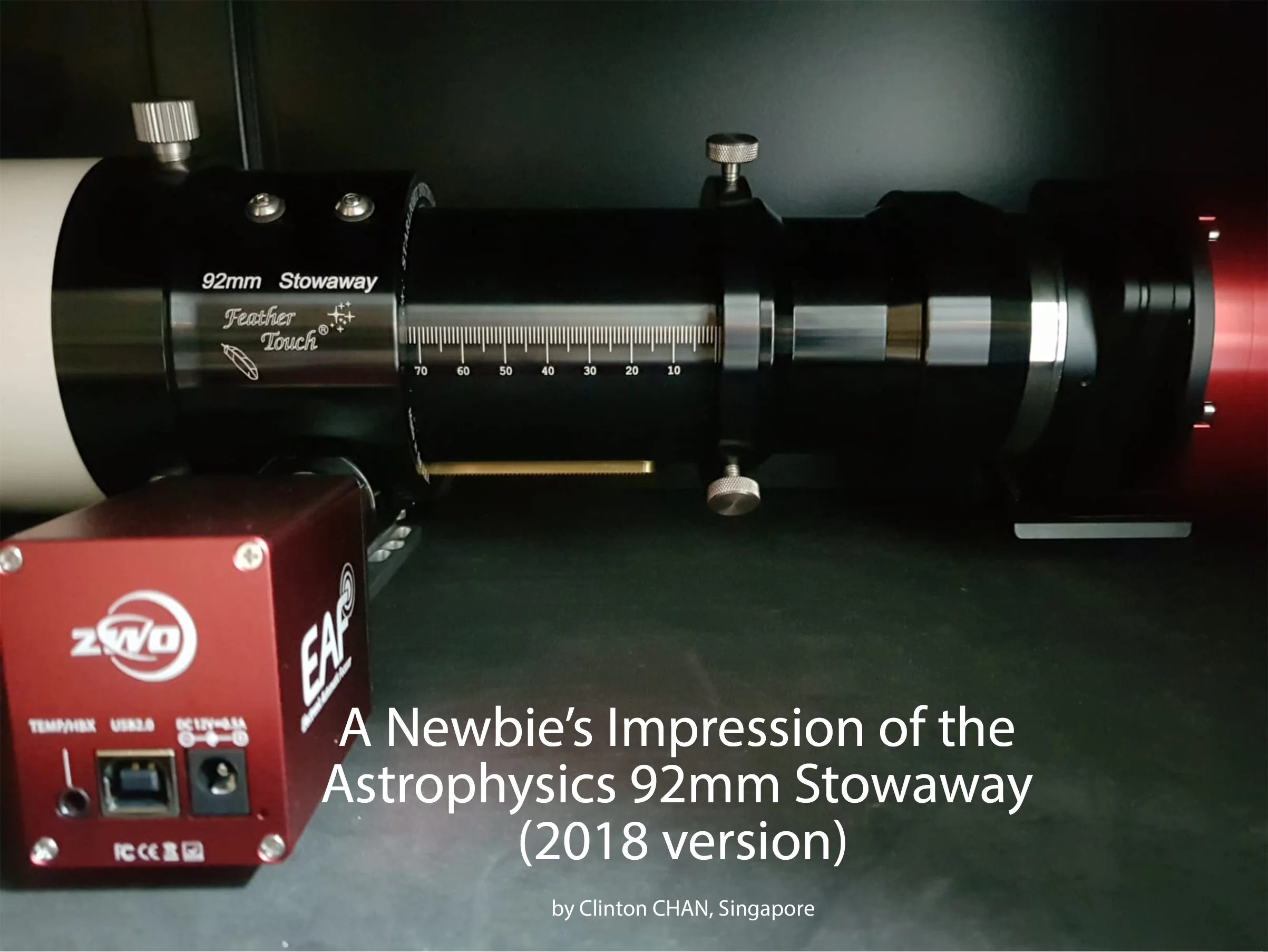
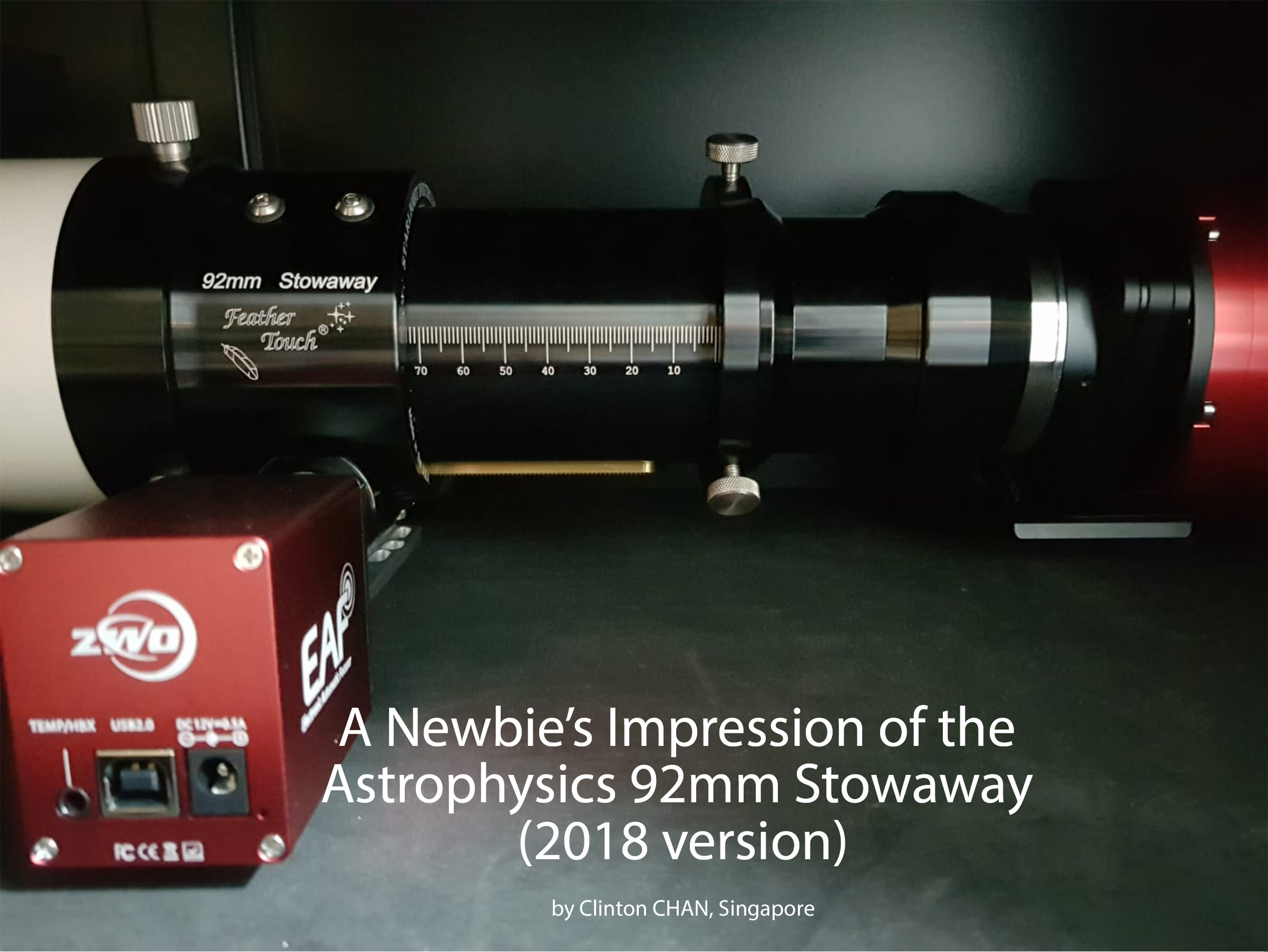
The scope arrived a few months later in a grey Pelican Air case with the flattener I ordered. It is not as small and light a scope as its name might have suggested. It is about 53cm in its retracted size and feels quite hefty. Everything about it screams quality and an attention to detail second to none.
Over-engineered aluminum caps, screws etc are added confirmation to its well-earned status.
Online reports about the meticulous lens finishing and manual calibration before being assembled added to
that aura. The feathertouch focuser seems par for the course, being equally well made and buttery smooth. This is my first scope with this focuser and it clearly lives up to its reputation.
The proof of the pudding is in the eating, and I had it up once the sky relented. Aftter installing the visual train, up it went on the EM200. The first light was mainly looking at the moon and planets, which are about the only things easily located, Singapore having one of the brightest skies on the planet. I am no visual expert, but the views through the Takahashi eyepieces (32, 12,5 and 5mms) seemed devoid of any obvious chromatic abberation or coma, and the contrast was excellent. On the quarter moon, craters were well defined with no light bleed into the dark sky beyond. Jupiter showed well-defined bands and the rings on Saturn were magical.
A faint glimpse of bright star clusters showed pinpoint stars and Antares was a dusky red.
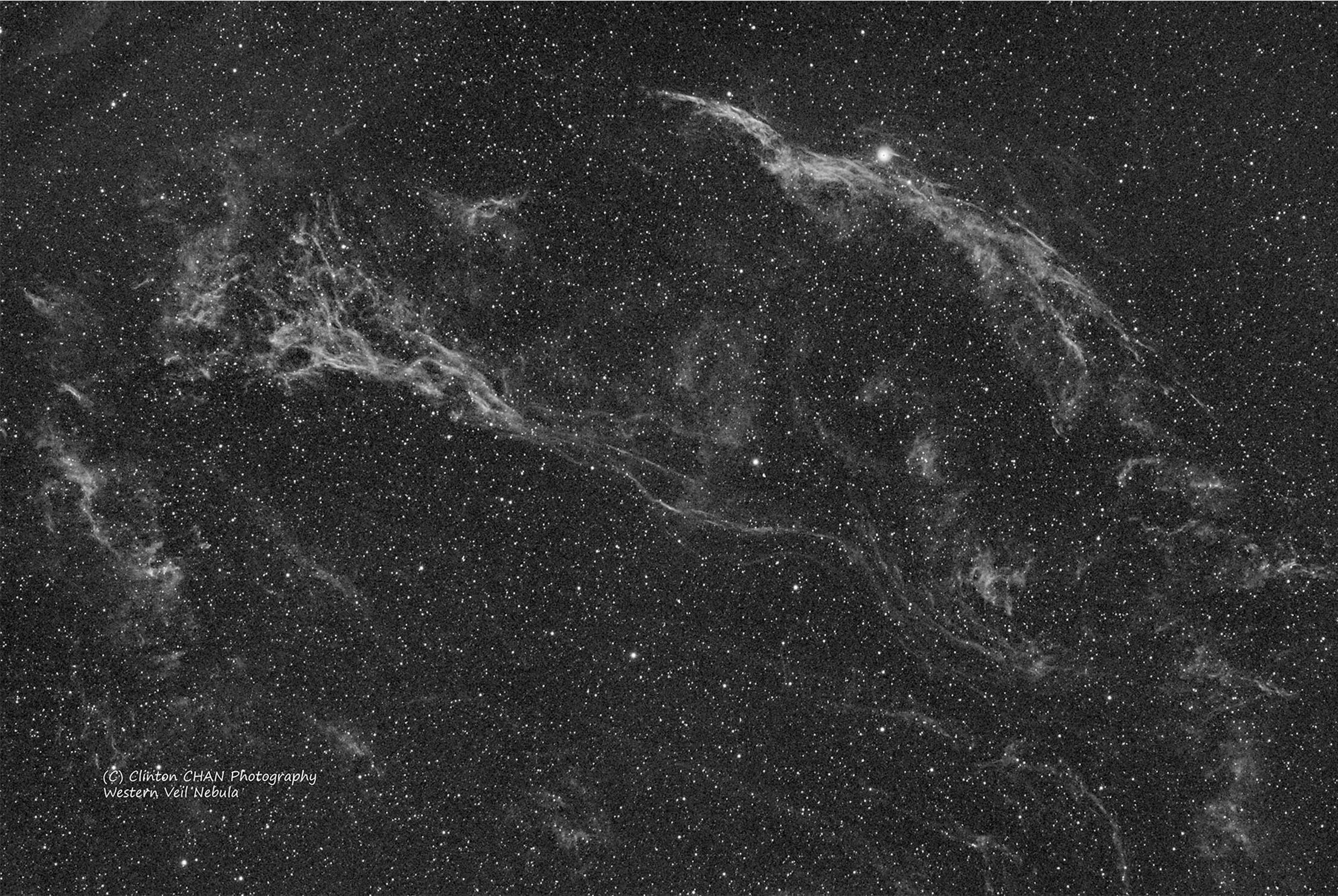
Over the next few nights, imaging sessions were done and the prawn, veil and lagoon/trifid nebulae were attempted in H-alpha. The flattener was included for these and the stars were perfectly round to the corners of the full-frame sensor. Fine details were elicted (as far as our Bortle 10 skies allow)
for the nebulae, which was a nice surprise. The images are posted here if you want to have a look...:P https://www.flickr.com/photos/clintonhazel
Just to point out some of what I feel are its compromise points: when imaging, the focuser must be racked out some 75mm (almost the limit) to achieve focus with the flattener, which raises the possibility of flexture for heavier setups. This is due to the long 160mm backfocus to accommodate
bino and other visual setups. The scope is almost 1m long when fully extended for visual or imaging use, which necessitates higher mount payload/torque requirements in certain setups.
Another aspect of being a generalist scope is the slot in design for the flattener and visual adapters, for easier interchangability. It uses a ‘Doveloc’ mechanism which uses sharp conical tipped securing screws – the conical tips wedge the slanted edge of the adapters to ensure an orthogonal and tight fit, but at the same time dent the edges of the adapters, marring an otherwise perfect kit. A personal quirk – I prefer clamshells or hinged rings – the AP rings are semicircles with screws on either side, which while allowing finer fit adjustments, also make it harder to mount the scope – better to leave the rings on all the time and live with the added bulk.
So what are my overall impression of this legend? If you have only room for one do-it-all scope, for visual and imaging whilst also being airline portable, this scope would probably be THE ONE. It excels in all these aspects. But, and it is a big but, here’s the thing...it is a generalist scope, and to
the perfectionist/specialist, it won’t be good enough. For me, it is the perfect do-it-all traveling scope for overseas expeditions – a fine instrument and definitely a keeper.