Finding your night vision
by Ben Coffman
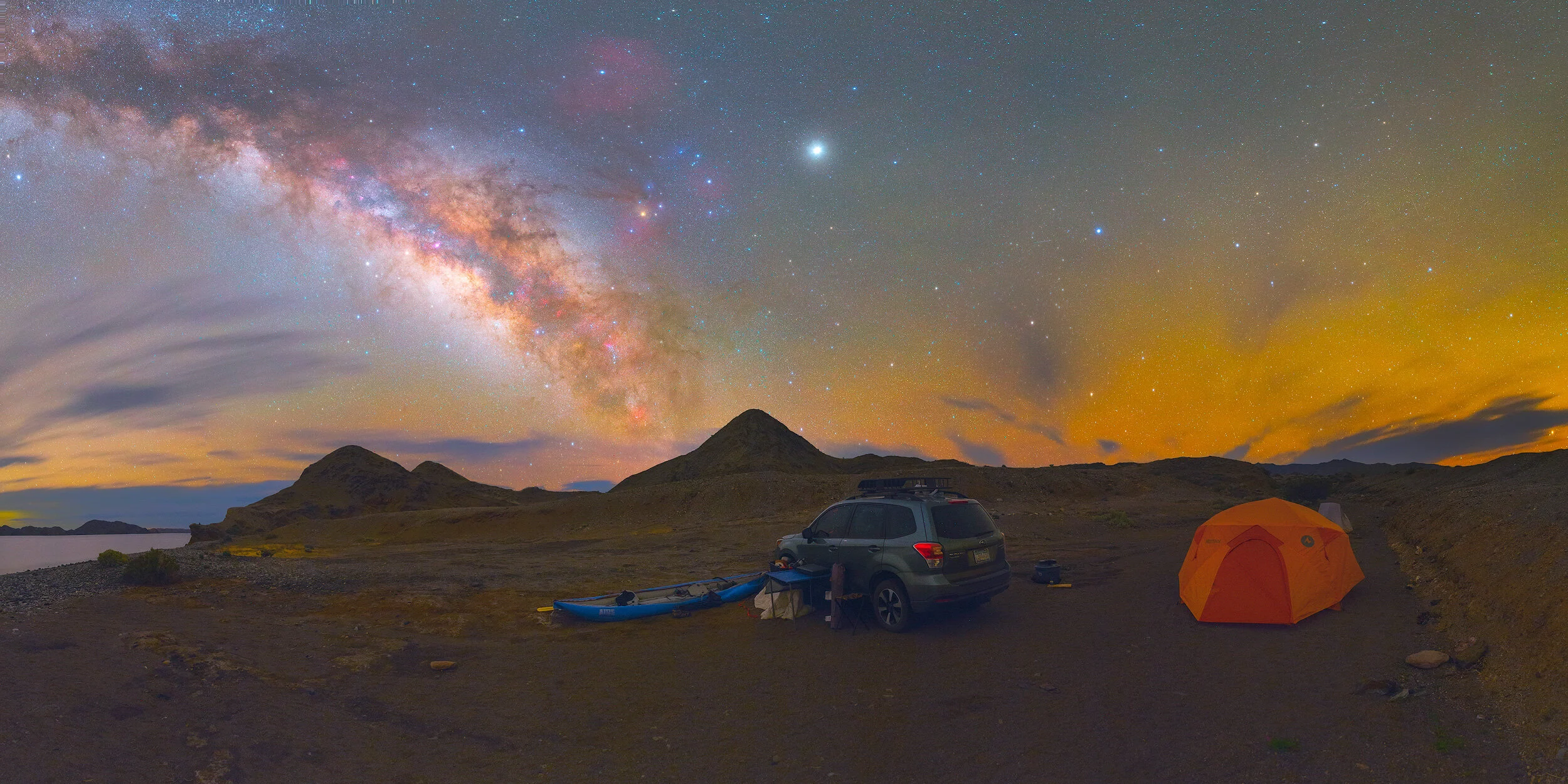
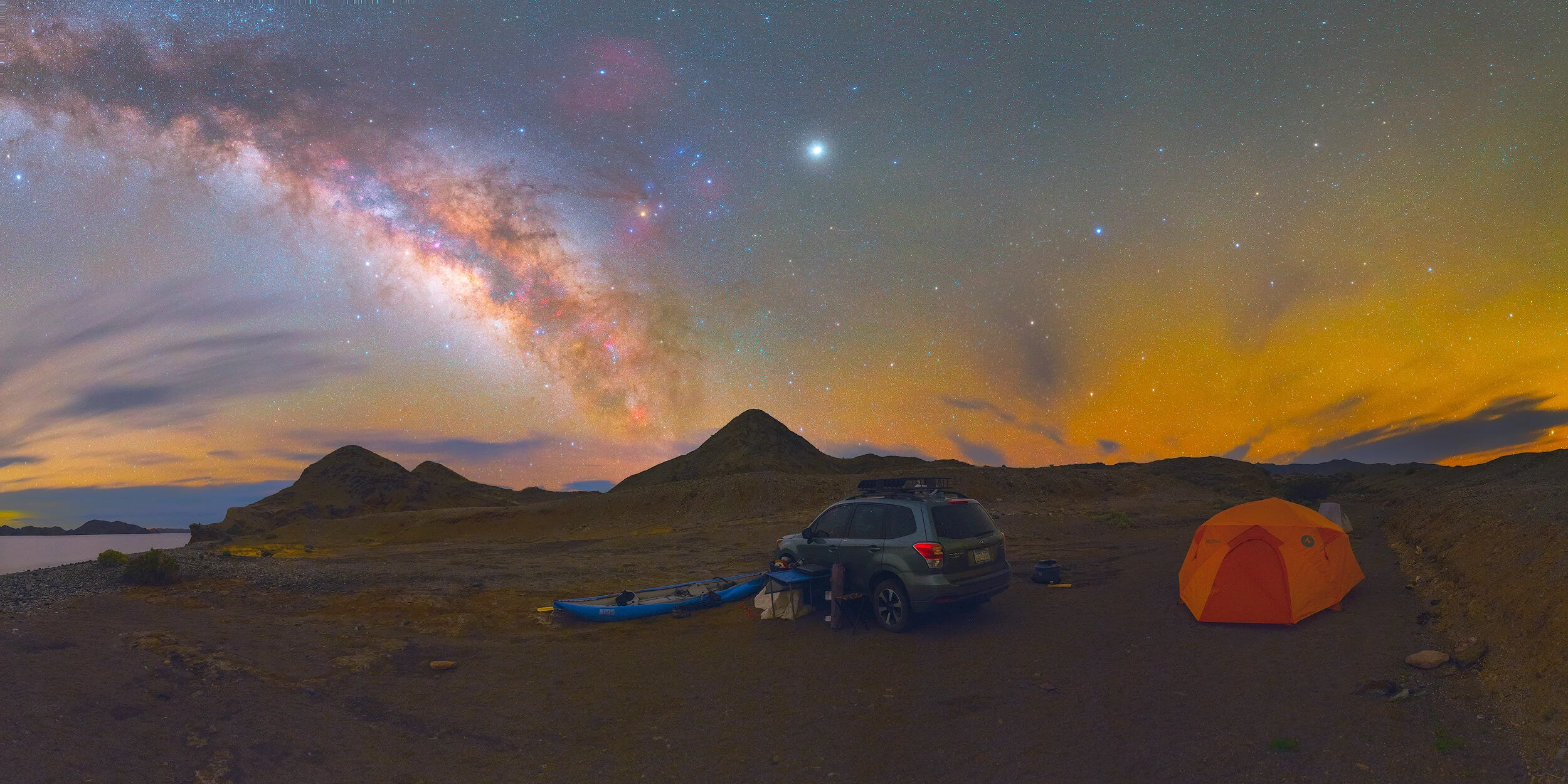
Jupiter over the Baja camp
Routing around technical limitations in order to achieve my vision has been one of my biggest motivations in night-sky photography. Some people like jigsaw puzzles or Sudoku, but, for me, photography has always been about the challenge of marrying the technical to the artistic, the ability to dream up a vision with my right brain and meet the technical requirements for that vision with my left brain.
Modern landscape astrophotography
In 2003, I bought my first digital SLR, a Canon Rebel, and benefitted greatly from the immediate feedback of shooting digital. In 2011, I moved to Oregon from the Midwest. Oregon’s natural beauty gave me a better opportunity to experiment with landscape photography. I was also continued my journey in night photography, which led me to leaving the house after my young children went to bed in order to go take long exposures in downtown Portland. These high-contrast scenes, with streaking lights and strange lens flares, captivated me.
By the end of 2011, the first wave of modern digital landscape astrophotographers were beginning to find a foothold in the photography world. For me, this was an exciting time. Flickr had a robust online community and offered daily inspiration. I tried to expand my knowledge, experimenting with light painting. My photography interests also began to intersect with my hiking interests. I expanded my night photography from urban environments like Portland to the wilderness areas around Mt Hood as well as long weekend trips to places like Crater Lake National Park, which still remains one of my favorite places in Oregon to take photos.
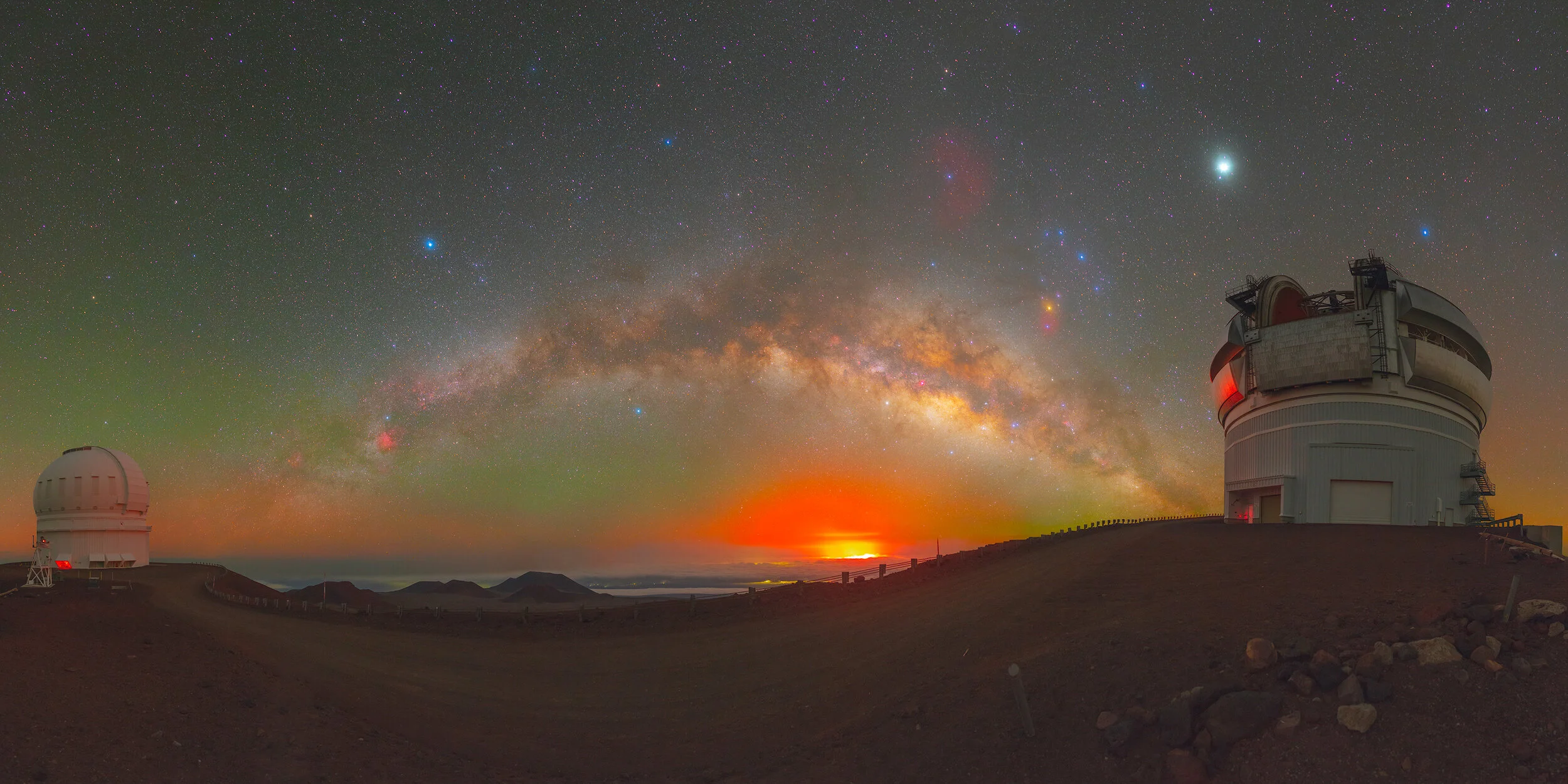
Lava glow from Mauna Kea, June of 2018
Pushing through limitations
By 2012, I began to recognize the limitations of photographing astrolandscapes. Aberrations and a lack of sharpness in the corners of the frame irritated me, as did the inability to capture a full Milky Way arch, even with ultra-wide focal lengths. I began to research panoramic processing for shooting landscapes.
In my mind, the night sky and the wide-open expanses of the American West naturally lent themselves to panoramic treatments. Again, I followed my interests, struggling through the assembly of numerous night-sky panoramas, spending hours and even days on a single project, restarting them over and over again as I scrapped failed attempts. These were frustrating times, a weekend spent driving hundreds of miles and snowshoeing for miles in the freezing cold, only to come home and realize I was going to need to spend days of my life painstakingly assembling flawed final photos, assuming my laptop didn’t crash. I continued to study the process online and began to practice in my backyard. I upgraded software, which helped. I began to use nodal slides, panorama heads, and other gear, which also helped. I made a lot of mistakes, but I eventually whittled down the time involved with panorama assembly.
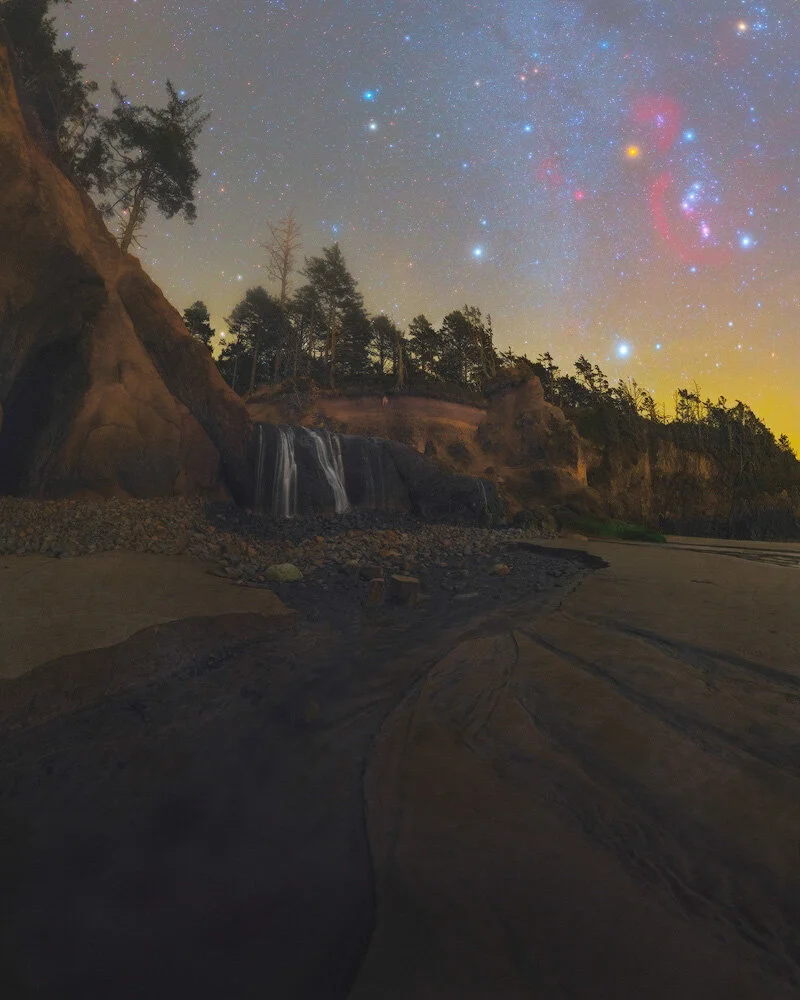
The hunter over Hug Point falls
By 2013, in a bid to increase the quality of my night sky captures, I had also adopted the use of an equatorial mount to track stars in the sky. Despite having been dropped onto concrete (don’t ask), and hauled all over the country, my 8-year-old Vixen Polarie still does everything I need it to do. In January of 2016, after spending hours researching the pros and cons, I sent in my trusty Canon 6D to be modified to be more sensitive to h-alpha. My interests then pivoted toward 360x180 virtual reality panoramas, and I began to occasionally shoot those as well. Later that year, I resumed experimenting with tracked panoramas, adding another layer of complexity to the panoramas I was interested in capturing. The process I carved out had some limitations, but the results were interesting to me, so I forged on.
My equipment and my style
I still shoot the night sky with my trusty Canon 6D, now full-spectrum modified. I use an Astronomik clip filter to get rid of unwanted IR. In a bid to continue streamlining my processes, the vast majority of my night-sky panoramas over the past three years have been shot with a Rokinon 24mm f/1.4 lens, mounted on my semi-homemade pano head, which in turn is mounted on my beloved Vixen Polarie. My gear setup is packable, relatively light, and reliable, and I’ve found that using a limited set of gear has allowed me to develop a more recognizable style.
I describe my style of night-sky photography as hyper-realistic, an artistic rendering grounded in reality. I don’t do composites or other digital fakery. Everything I do is captured in a single setting without moving my tripod. If I get skunked by clouds, I pack up and head out; I don’t salvage the night by shooting the foreground and blending it with a night-sky taken from another night. However, I’m not opposed to taking creative liberties in Photoshop. The colors in my photos are clearly amplified and impossible to be seen by the naked human eye, but I still view them as being “real,” or at least “hyper real.” The intention of my night-sky photography was to never mislead the viewer, but instead to answer questions that I had. What if we could see h-alpha? What if we could see these deep-sky objects in relation to a landscape, as well as in relation to other objects? What if airglow, rather than an annoying phenomenon to be minimized for deep-sky work, could be amplified to enhance the beauty and interest of widefield astrolandscapes?
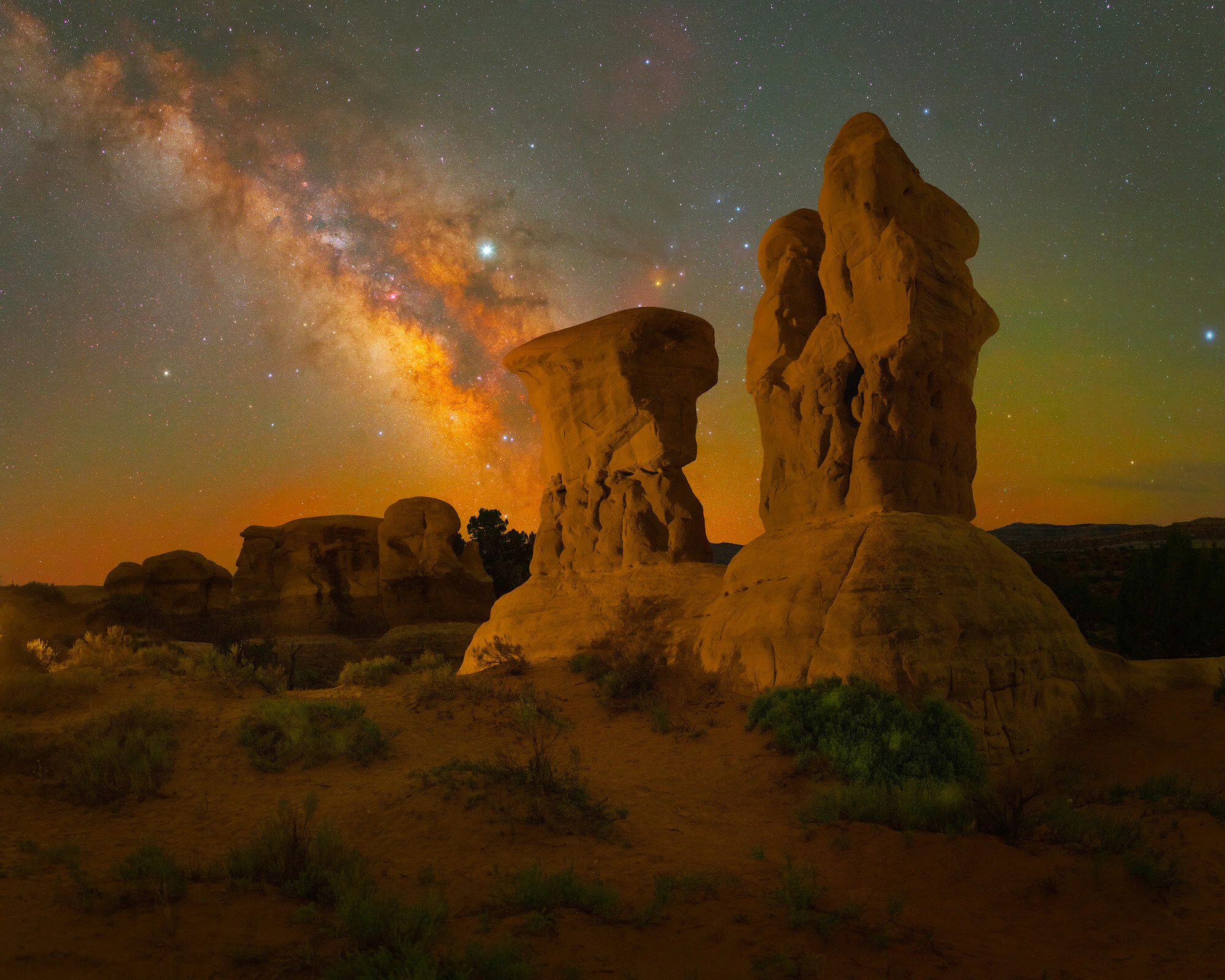
The ogres' tombstones
Conclusion In my opinion, there’s nothing more important that finding interest in and being happy with one’s own work. It is, after all, an expression of you. Over years of shooting night sky photos and teaching others to shoot night sky photos, I’ve found that photographers are a varied bunch. I’ve met artists who could barely operate their cameras as well as gear hounds who could ramble on for days about Sony’s newest offerings but who couldn’t find the words to discuss composition, even in the abstract. I’ve always felt that it’s okay to be a bit of a hedonist when it comes to photography: Pursue what interests you, dream a big dream, and then develop the technical skills required to meet that vision.
Website: www.bencoffmanphotography.com