Rodd Dryfoos
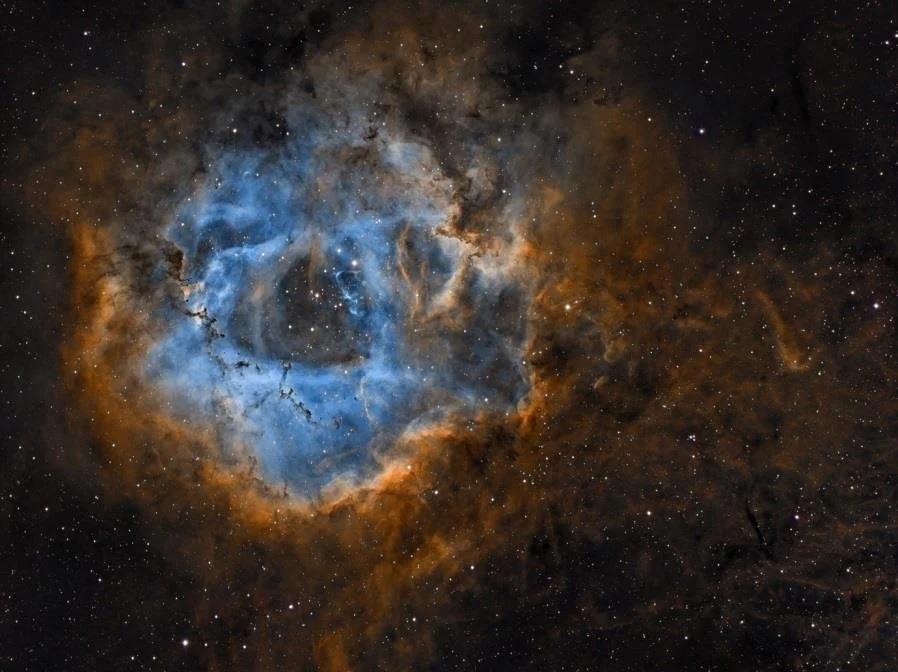
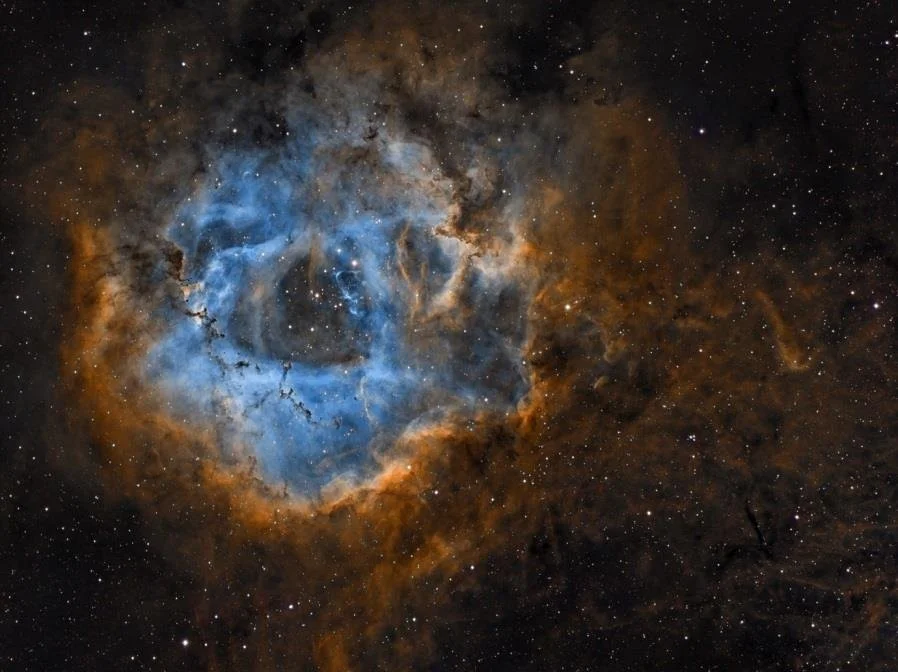
Rosette Nebula. About 48 hours of data collected with 3 scopes: np101is and .8x reducer, FSQ 106 with .6x reducer, and TOA 130 with .7x reducer, and two cameras (STT-8300 and ASI 1600). A narrowband image using the Hubble Palette with SII to red, Ha to green, and OIII to blue.
I have always been enthralled with space and cosmology. When I was in junior high school, my father bought me a very modest 6” Newtonian reflector and I was hooked on observing. But I wanted to take pictures! At the time, digital technology was but a figment of the science fiction writer’s imagination and film was the only photographic medium available. “That’s O.K.”, I said to myself with conviction. “All I need is a camera adapter to connect the camera to the telescope. Then I will be all set!” This, of course, was an absurd notion and I was thankfully spared the many hours of frustration that would have inevitably befallen me if I had managed to locate an appropriate adapter. Polar Alignment was but a vague concept to a kid with a primitive motor drive and setting circles. To this day it amazes me how amateur astrophotographers in the pre “goto” era captured the beauty of the heavens with film; for without a darkroom, how did one know when focus had been achieved, or that the scope was actually pointed at the target? A 24-hour development service would hardly have been a viable option. Even with a dark room nearby, there would have been a 15-20 minute delay between exposure and development. Another option would have been to switch from eyepiece to camera and back again. But this is not a simple task —especially with threaded connections on a cold night (which can be difficult to unthread). So how did they do it (and keep doing it!)? You got me. So, my dream of astrophotography was put on hold until 2015, when I reawakened a slumbering beast within – and he awoke hungry, never haven eaten! Digital technology was the spark that finally lit the conflagration (that and an exceptional mount). I inoculated myself against aperture fever by selling a 14” fork mounted behemoth and investing in my first imaging setup – a Televue np101is (a superb flat field 4” refractor) and an Astro-Physics Mach 1 mount; and the rest, as they say, is history.
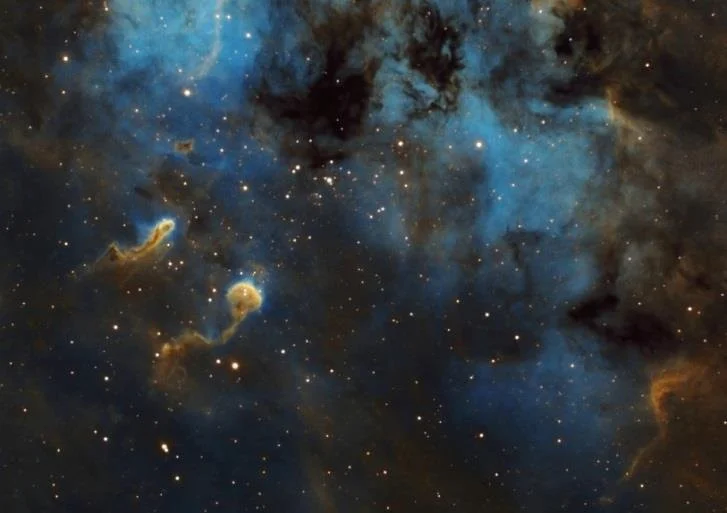
IC-410, the Tadpole Nebula. C11Edge and .7x reducer with ASI 1600 camera. About 13.25 hours: Ha: 46 300”, OIII: 38 300”, SII: 76 300”
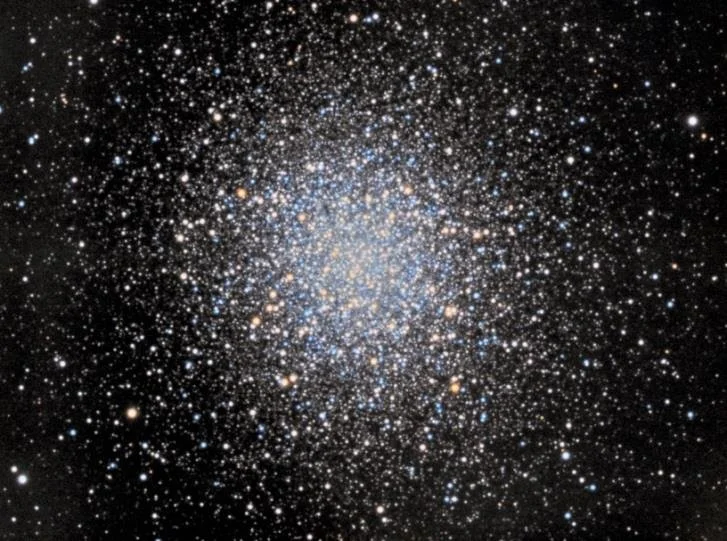
M13 – Globular cluster. C11Edge native and ASI 1600, unguided.
Red: 203 20”, Green: 317 20”, Blue: 325 20”
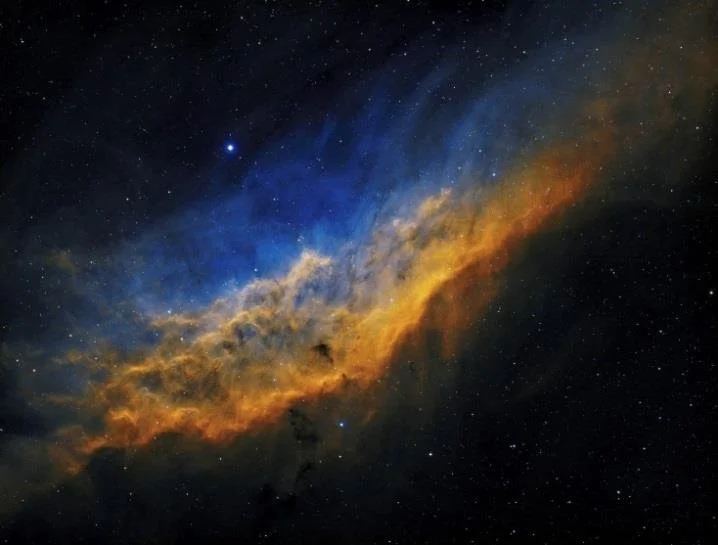
NGC 1499 – The California Nebula. Hubble Palette. Np101is and FSQ106 EDX IV. Ha: 63 300” & 7 1800”; OIII 62 300” & 16 1800”; SII 30 300” & 22 1800”
I now rarely miss a clear night (which seems, unfortunately, to be getting rarer and rarer in Connecticut). I enjoy shooting narrowband as well as LRGB, though poor skies make LRGB imaging difficult. I again felt the pangs of aperture fever and the desire for longer focal length imaging after a few years of wider field, shorter focal length imaging, and invested in an 11 inch scope (a Celestron C11Edge HD). Poor seeing and light pollution make using it a bit challenging (not as bad as the 14” though), but on dark stable nights, it is sublime. A couple of Takahashi refractors round out my arsenal of scopes (an FSQ 106EDX IV and a TOA 130 NFB). I have moved away from CCD cameras (an SBIG STT-8300) and fully embrace CMOS technology with a ZWO ASI 1600 (the beast wants me to upgrade to the 2600!).
My work can be viewed on my Astrobin page at https://www.astrobin.com/users/RAD/.
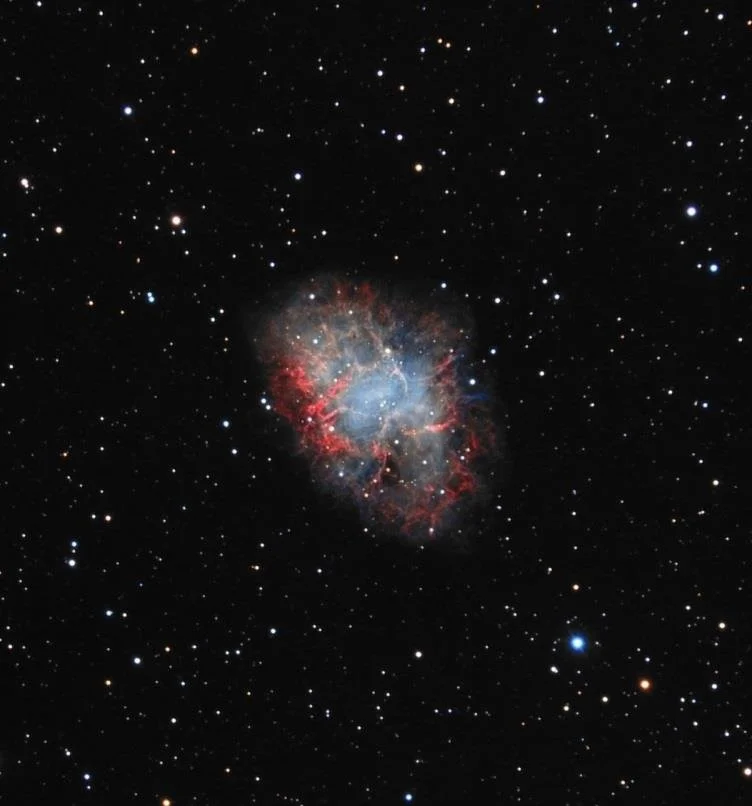
M1 (The Crab Nebula). C11Edge with .7x reducer, and ASI 1600
Blue: 2.25 hours using 60” and 10”; Green: 2.25 hours using 60” and 10”; Red: 1.5 hours using 60” and 10”
I became aware of First Contact Polymer when it came time to clean my scopes – a daunting task for a person of all thumbs. First Contact Polymer, however, makes it very easy. There is something cathartic about applying the polymer, waiting for it to dry, then peeling it, along with its load of smudges, pollen, and dust off the lens; much like a patch of sunburned skin (who can resist that!). It is also a great way to protect lenses if storage is required. In Connecticut, spring and summer see large amounts of pollen, which gets everywhere (yes, even on a lens that is capped and stored in a case). A coating of First Contact Polymer prevents the pollen from alighting on the glass and ensures a clean scope, even after months in storage.
Are you a First Contact Polymer user and astro imager? Contact us at sales@photoniccleaning.com for the chance to be our featured guest in an upcoming issue courtesy of Photonic Cleaning Technologies! Not familiar with our products; see our ad on the next page or visit us at http://www.photoniccleaning.com