The Universe at Your Finger Tips
Two thriving remote observatories in Northern Chile
By Elke Schulz
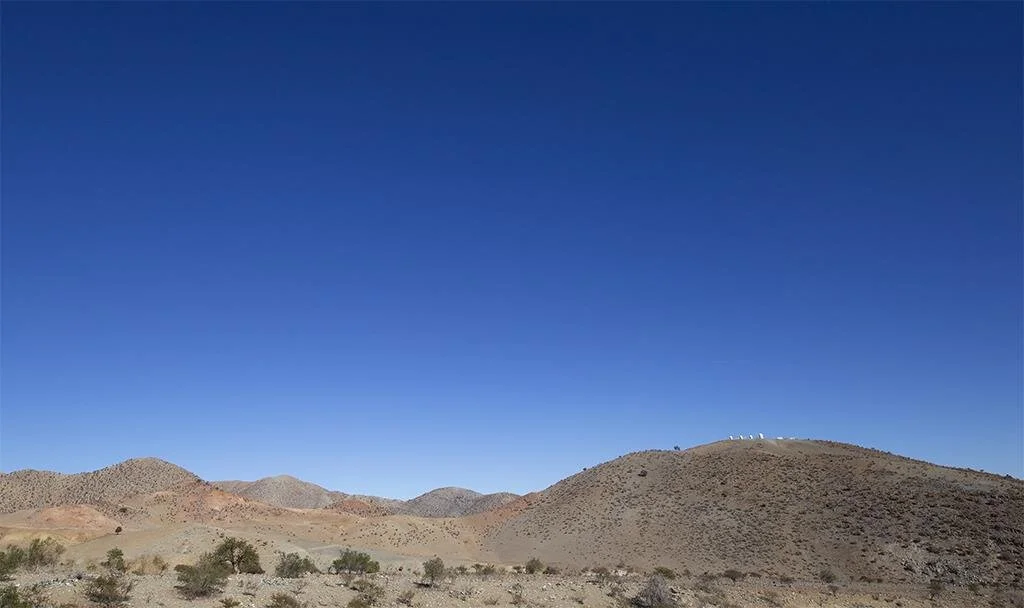
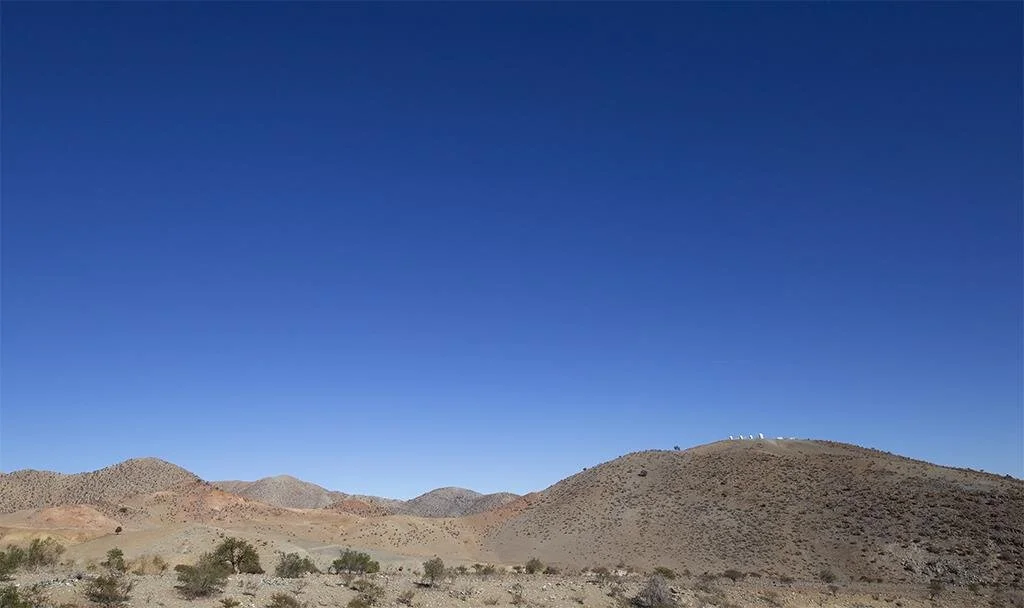
The observatories El Sauce and Chilescope in the Río Hurtado Valley in Chile © Elke Schulz
It’s an open secret: a unique combination of first-rate sky and the largest, most powerful telescopes of the world have made Northern Chile an astronomer’s paradise. Awe-inspiring projects such as the ELT (Extremely Large Telescope) on Cerro Armazones, the GMT (Giant Magellan Telescope) on Las Campanas and the Vera Rubin Observatory on Cerro Pachón ensure that Chile will remain the home of astronomical superlatives for the foreseeable future.
Astro-tourism is flourishing, supported by dozens of new observatories and a robust tourism infrastructure offering everything from hotel rooms with installed telescopes to stargazing night hikes and cosmological story telling around campfires (live music included). Astrophotography is not taking a back seat either. In the remote Río Hurtado valley, within eyeshot of the professional observatories on Cerro Pachón, two observatories specializing in remote astrophotography share a mountain top: the observatories El Sauce and Chilescope.
While El Sauce focuses on telescope hosting, Chilescope offers "Astronomy on Demand", i.e., astronomy via the internet. The site’s conditions for astronomy are excellent: seeing is under one arc second, the sky quality values reach 22, and the number of clear nights is around 300.
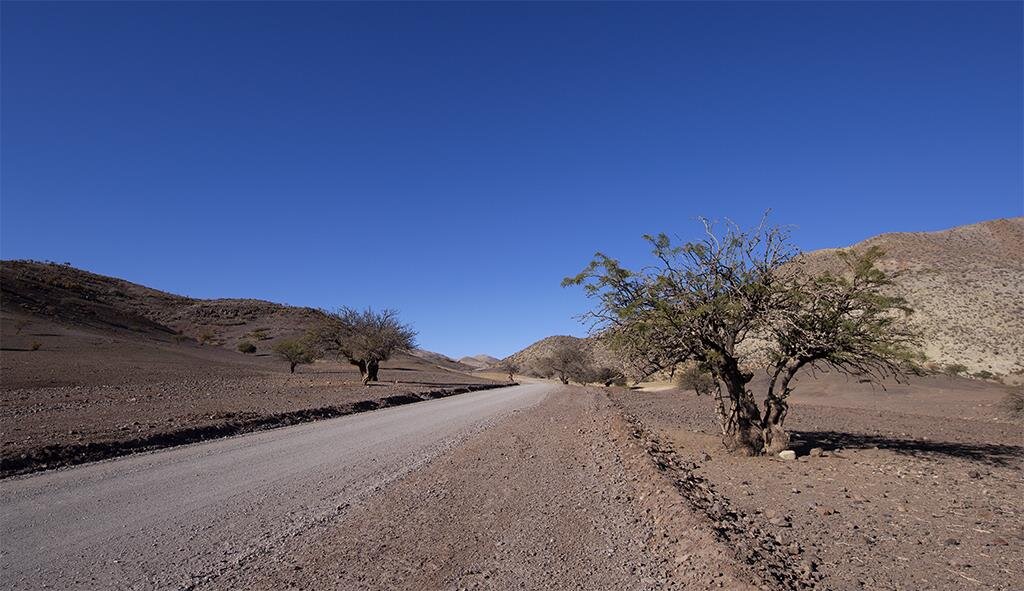
road leading to the observatories © Elke Schulz
Following the aptly named star route ("Ruta de las Estrellas") from the provincial town of Ovalle to Río Hurtado, you reach the turn-off to El Sauce after approx. 33 miles. The dirt road winds through various valleys, passes the tiny village El Sauce and climbs up to the observatories at 5249 ft. While the white domes of Chilescope are visible from a distance, the observatory El Sauce remains hidden for a long time and only reveals itself upon arrival.
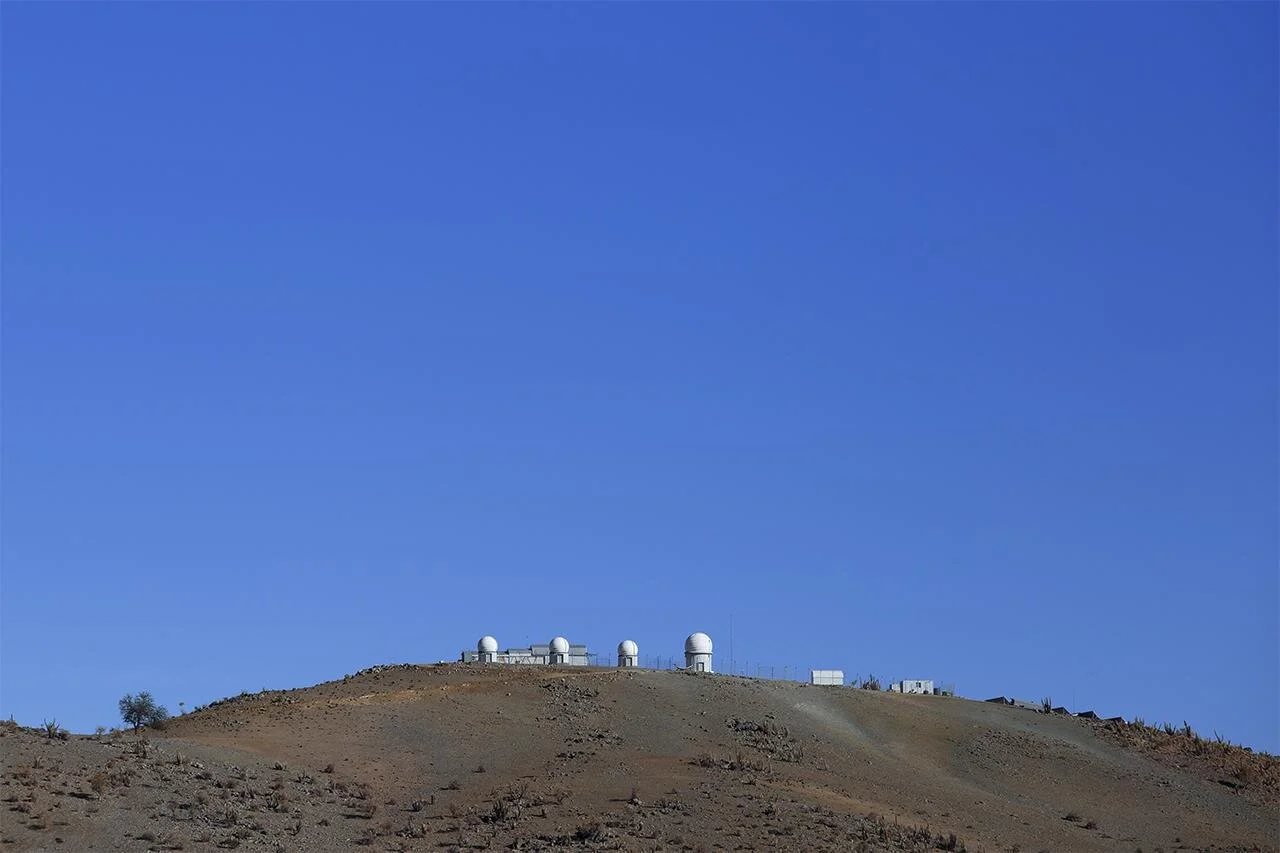
The white domes of Chilescope are visible in the foreground © Elke Schulz
The Observatory El Sauce
The Observatory El Sauce is operated by the company Obstech that was founded by astronomers and optical engineers in 2013. The observatory itself was established in 2015 as a fully automated remote observatory. Today the number of telescopes on El Sauce is 47 – and rising. Most of the telescopes share large roll-off or clamshell buildings. There are only a handful smaller structures. The largest building accommodates 11 telescopes. The precise placement of the telescopes ensures a safe distance between the instruments. Currently, the biggest telescope is a 70-cm reflector, operated by an astrophotography aficionado from Asia. In a few months, however, it will already be surpassed by a 1-meter telescope from a university in Kazakhstan, which will be used to trace supernovas and transient phenomena.
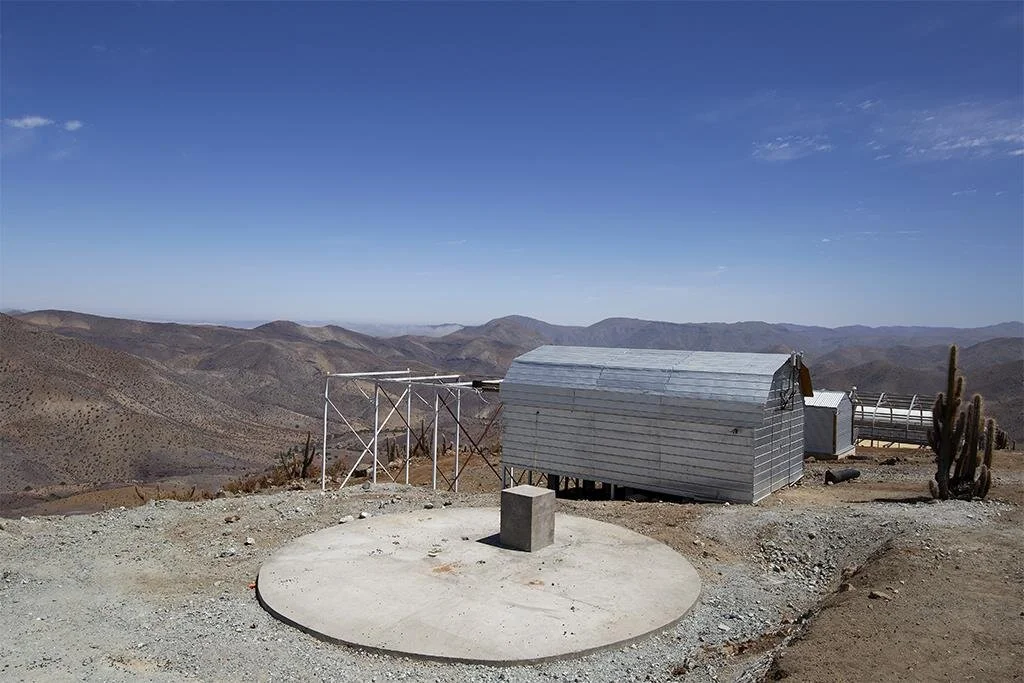
Place for a new dome © Elke Schulz
The owners and operators of the telescopes can be divided into three groups of similar size: amateur astronomers/astrophotographers, scientists, and corporations. The boundaries, however, are not always clear-cut. For instance, the amateur astronomers Phil Evans and Nick Dunkel provide data for professional scientific projects on exoplanets and asteroids.
Well-known astrophotographers such as Martin Pugh and ESO Ambassador Jose Joaquín Perez also opted for El Sauce as remote home for their telescopes. Ciel Austral, a well-known astrophotography group from France, traveled to Chile as a group to set up their own building and install their instruments. One of their results, a high-resolution mosaic of the Large Magellanic Cloud with a total of 1,060 hours exposure time, became a huge hit last year.
The majority of the corporations that are operating telescopes on El Sauce are active in the field of Space Situational Awareness, a sector which, according to Dr. Vincent Suc, CEO of Obstech, will continue to grow in the coming years. The reasons for this development are the ever-growing number of Starlink satellites and the fact that more and more countries are planning to conduct their own monitoring of space debris. This year, a new science project will come to El Sauce: the ATLAS project, an early warning system for asteroids and comets, developed by the University of Hawaii and funded by NASA. ATLAS currently operates two 0.5-meter telescopes in Hawaii. In order to extend its radius of operation to the Southern hemisphere, two new telescopes will be installed this year: one on El Sauce (ATLAS-3) in Chile and the other in South Africa (ATLAS-4).
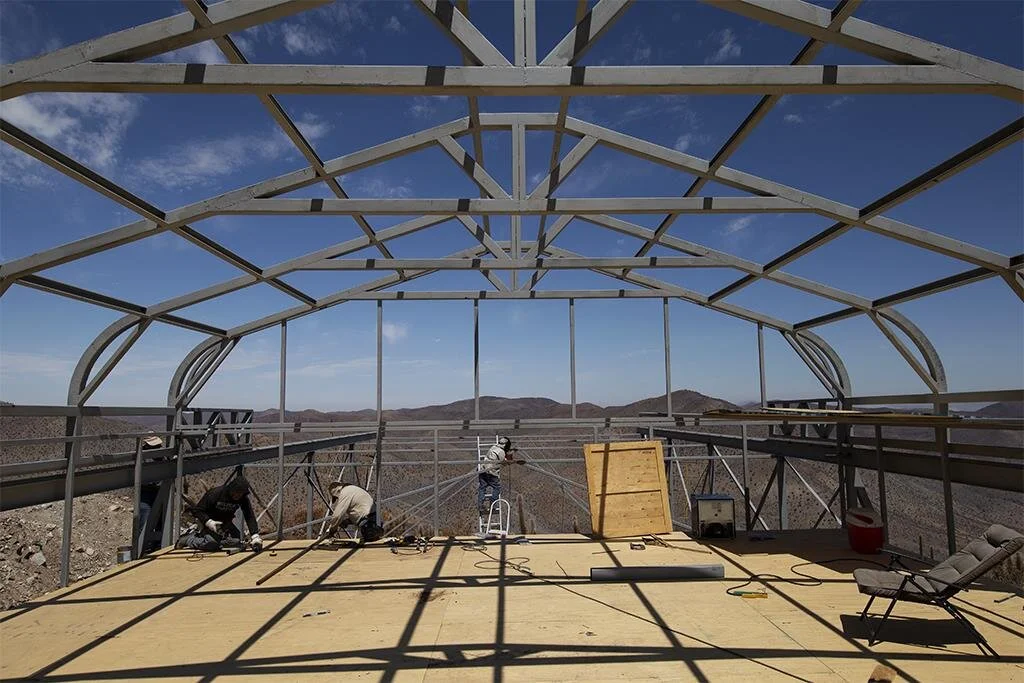
Construction of a new roll-off roof building for 11 telescopes © Elke Schulz
Almost all of the customers come from abroad. In fact, only two clients are from Chile. The political unrest that has flared up in Chile in recent months has not had notable repercussions for astronomy on this remote mountain top. International interest in this location remains undiminished. According to Vincent Suc, the number of installed telescopes alone will double this year, requiring the construction of new buildings and an increase of energy supply. For this reason, the solar energy installation, which consisted of 40 solar panels and 60 batteries, has been doubled recently. Although the previous installation drew only one third of its output limit, Obstech decided to boost capacity in anticipation of future needs, which will guarantee prolonged power supply from batteries without having to rely on the backup diesel generator.
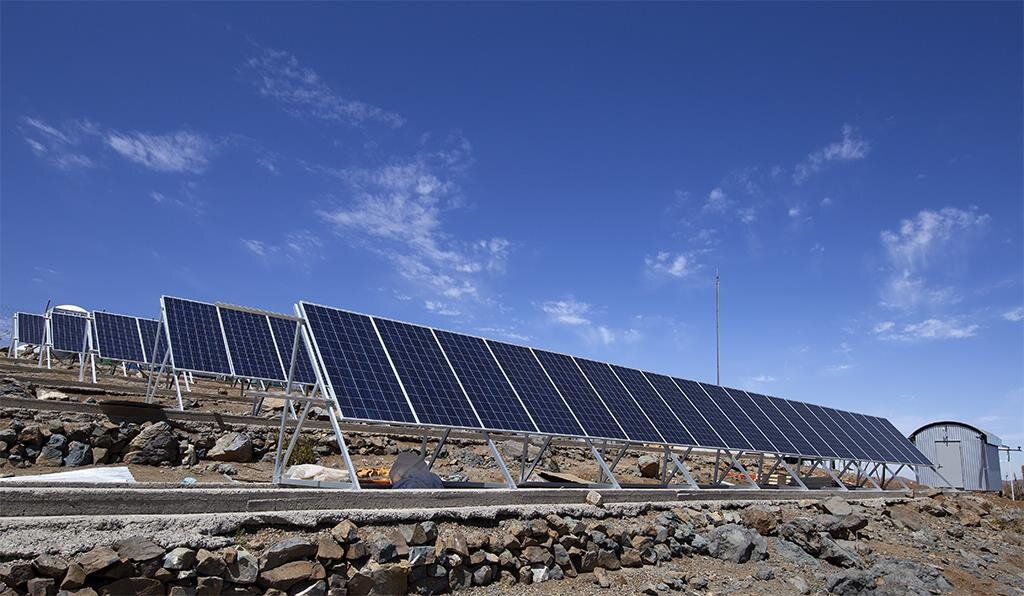
Solar panels © Elke Schulz
The operators of the observatory exhibit similar caution with respect to the internet connection. A radio connection to an existing broadband line provides an excellent symmetrical speed of 100 Mbit/s. In addition, Obstech invested in two backup connections from another provider that enable symmetrical 70 Mbit/s as well as 4G. The average data volume generated per night is less than 500 GB and each user can upload 10 GB of original data per night. Should a project require a larger data volume, this can be allocated easily via dedicated lines.
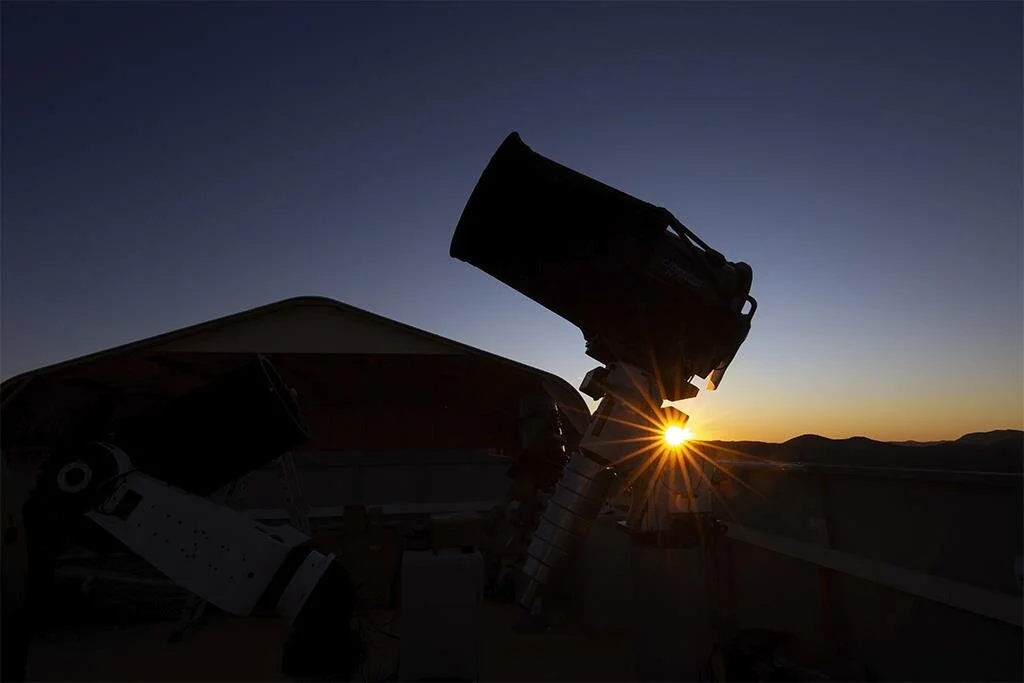
Sunset © Elke Schulz
When night falls over El Sauce, and the weather plays along, the roofs open fully automatically. The control mechanism of the roofs is linked to the weather station. Should the weather conditions change during the night, the roofs will close automatically. The basic construction of the roll-off buildings ensures that the roofs can be moved instantly, regardless of the telescopes' current position. With the help of special software written by Obstech itself, the observatory staff is always informed about the latest status of each roof, including video transmissions. In addition, the respective owners of the telescopes always receive an email or SMS whenever the roof moves. Of course, the system is also supervised around the clock by an employee on site, and additionally monitored during the night by an engineer from Santiago.
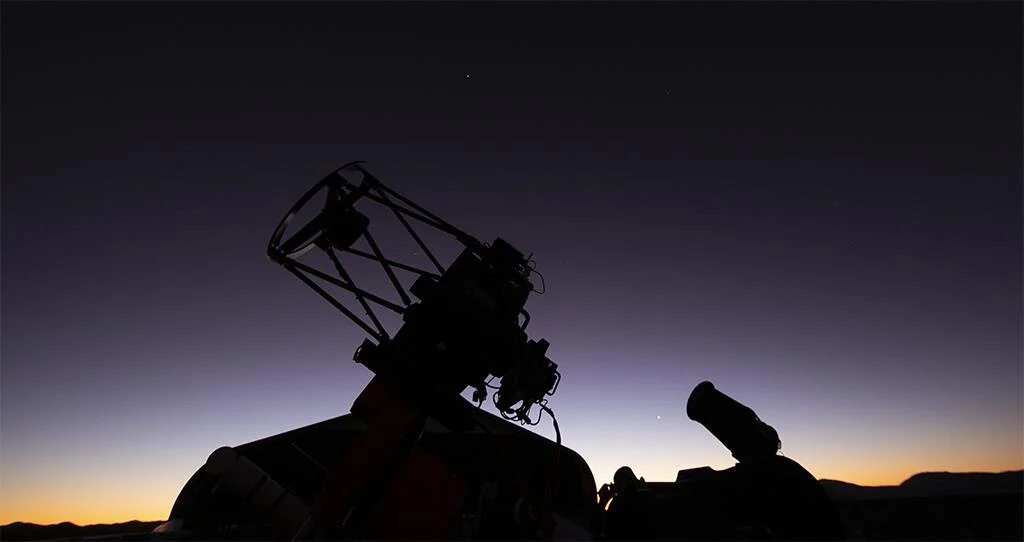
Waiting for the night © Elke Schulz
Those who would like to treat their telescopes to a spot at the observatory El Sauce have to dig deep into their pockets. The standard price for a telescope place is currently a whopping $7,500 US per year, which might be cost-prohibitive, especially for individual amateurs. As a result, more and more astronomy groups and associations invest together in a group-owned facility, effectively reducing the monthly amount per person and making this pleasure more affordable. Although Obstech offers to install new telescopes, amateur astronomers in particular prefer to travel to Chile to install their instruments themselves.
Currently these visitors can only be accommodated in a rather small room at the observatory. But this will also change. There are plans to add a small cottage with a total of three bedrooms, three bathrooms and a large kitchen-dining-living space, offering a spectacular view of the surrounding area. Adjacent to the lodge, a platform will be built for a 20-inch Dobson. This telescope is intended for visual observation for interested amateur astronomers, astronomy aficionados, and clubs that would like to travel to Chile as a small group to visually explore the southern skies under excellent conditions.
Chilescope
The first thing you notice when you are standing in front of the white domes of Chilescope is the distinctive fence that surrounds the entire complex. Four domes are located within the fenced-in area, one clamshell building, and various containers. Although the fence might convey the impression of a strict separation between the observatories, collaboration is very important in this remote area, and the respective teams work well together. Obstech's technical support team also supervises the installation of Chilescope. The solar energy system and the internet connection are shared by both parties, as is the surveillance of the entire mountain.
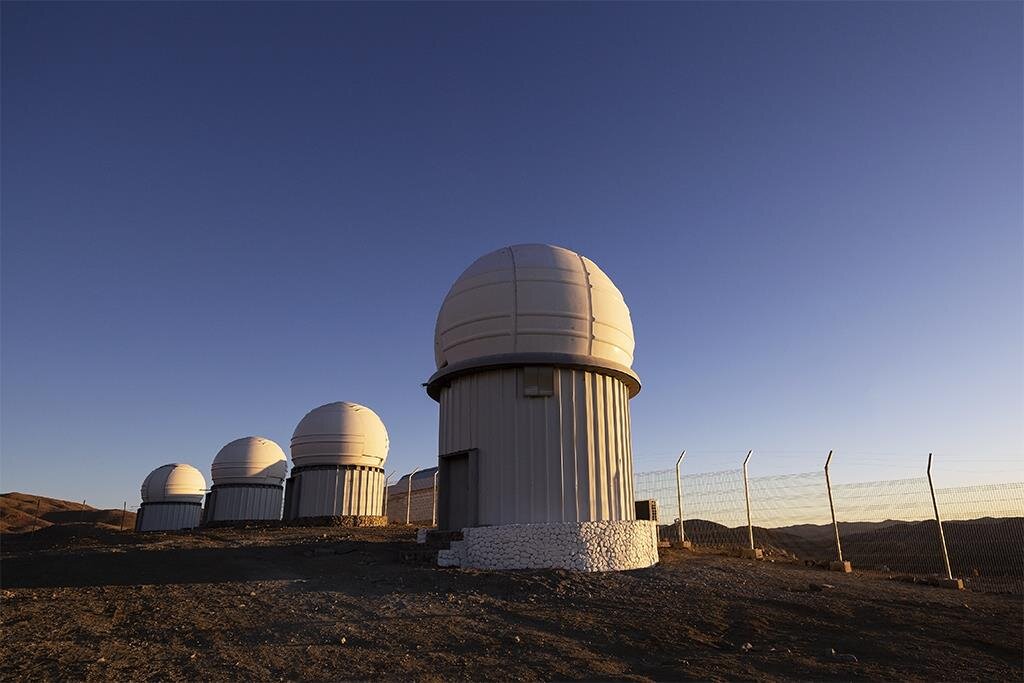
Chilescope domes © Elke Schulz
The company Chilescope was founded in 2015 by the Russian astronomy aficionados Ivan Rubtsov and Sergey Pogrebisskiy. Their vision is “Astronomy on Demand”, that is, renting powerful telescopes via the internet under a first-class Southern sky. Chilescope has been operating successfully since late 2017. International customers come primarily from China, Europe and North America. Most of the customers are amateur astronomers; only ten percent come from the science community. Positive comments in astronomy forums and the high number of returning customers (80%) seem to prove that this service is spot-on.
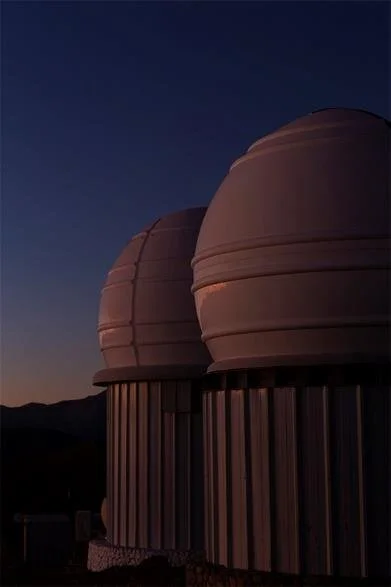
The domes of Chilescope after sunset © Elke Schulz
The Chilescope Observatory comprises of two 4-meter domes, each equipped with a 0.5-meter ASA Newton Astrograph (F3.8) on a Direct Drive mount. A third 4-meter dome is rented to a private company and therefore not available on the rental platform. The fourth and largest dome (5.5 meter) houses a 1-meter Ritchey-Chrétien telescope (f6.8) on an AltAzimuth mount, which is equipped for both deep sky and planetary imaging. In fact, Chilescope was the first commercial remote observatory in the world to offer planetary imaging. Apart from the domes, there is a smaller clamshell building that contains a Nikon 200mm (f2.0) lens, affectionately known as VST (Very Small Telescope), on a high-precision robotic mount.
Regarding the usage of the telescopes, there is no clear favorite among the instruments, however, there is a slight tendency towards the 0.5-meter astrographs. The existing range of instruments will be expanded to include additional fast astrographs (300mm aperture, f3.0), according to Sergey Pogrebisskiy. Another offer is ready to roll as well: Astrophotographers who own first-class equipment and have a reliable remote installation can rent out their telescopes on the Chilescope platform when they are not using them. This integration can be implemented within three days since Chilescope already has the necessary programming interfaces (APIs). The rental process for the Chilescope telescopes starts at www.chilescope.com.
The website, available in English and Chinese, is clear and concise so that new visitors can easily find their way around. It provides detailed descriptions of the telescopes and comprehensive current data on weather, seeing, and SQM values. You will also find a step-by-step description of the rental process, the prices (including discounts and refund options) and the payment mode.
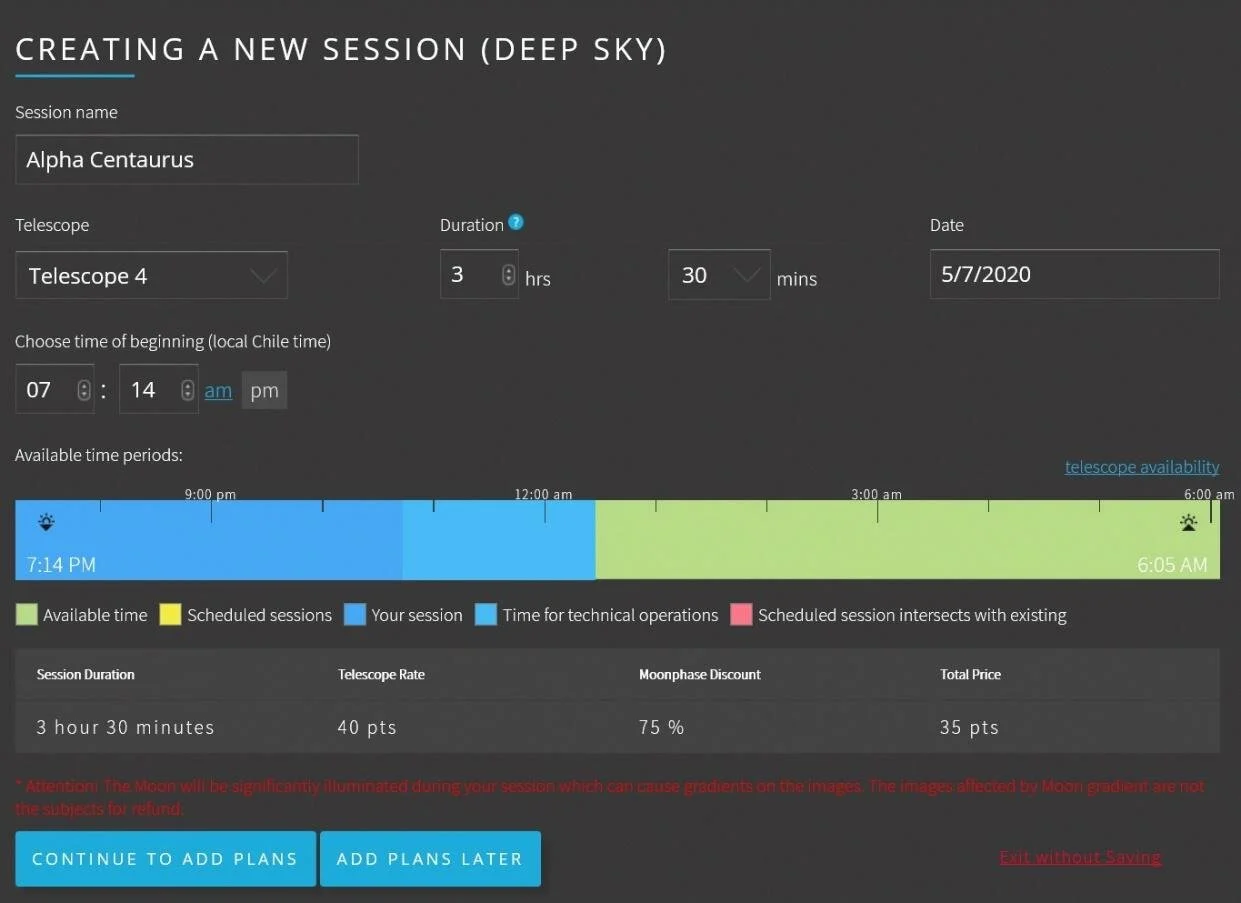
Screenshot of creating a deep sky photo session © Chilescope
Once you have familiarized yourself with the equipment (FOV, focal length, aperture ratio) and have a clear idea of the object you want to image, renting is easy. You register, pay (via PayPal) and can then enter your planning session. At the beginning of your planning session you have to decide if you want to do deep sky or planetary imaging. The latter is only offered for the 1-meter telescope and with the support of a live operator. At Chilescope, the live operator function is fulfilled by the renowned British astrophotographer and planetary specialist Damian Peach.
If you have opted for deep sky photos, you need enter the day and time (in local Chilean time), RA and DEC of the object, information regarding filters and binning as well as the number and duration of exposures. Further parameters such as dithering and autofocus can also be selected. You can image all objects that are at least 30 degrees high during astronomical darkness (in local time). If you err in this respect, the system will issue a warning.
If you have entered and saved your imaging plan correctly, it will be executed at the specified time. Shortly after the start of the imaging session, you will receive a status message, along with a link to the log file, which you can use to follow the session in real time. When the imaging session is finished, the FITS files as well as the calibration files are available for download.
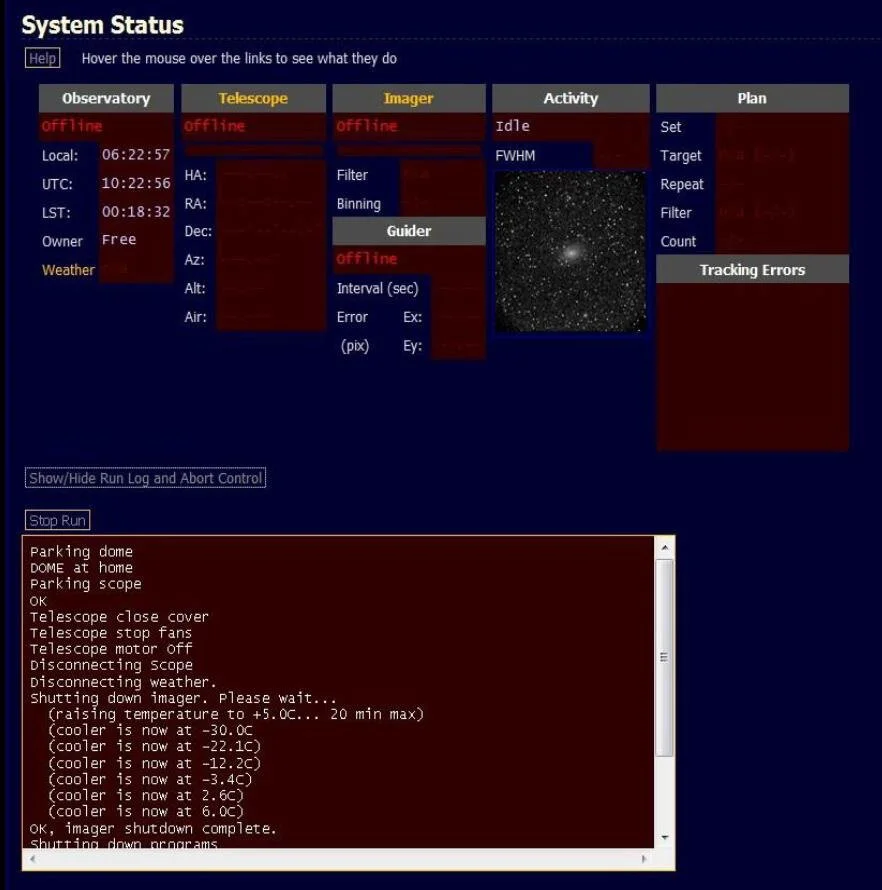
Screenshot of the log file © Chilescope
You only pay for the actual imaging time, which is calculated by the system with the help of an elaborate formula. Depending on which telescope you use, Chilescope adds 50, 60 or 80 percent to this imaging time as so called "technical time". This “technical time” refers to items like changing filters, refocusing, approaching objects, performing dithering and plate solving, dome movements, etc. As a customer, you do not pay for this “technical time”.
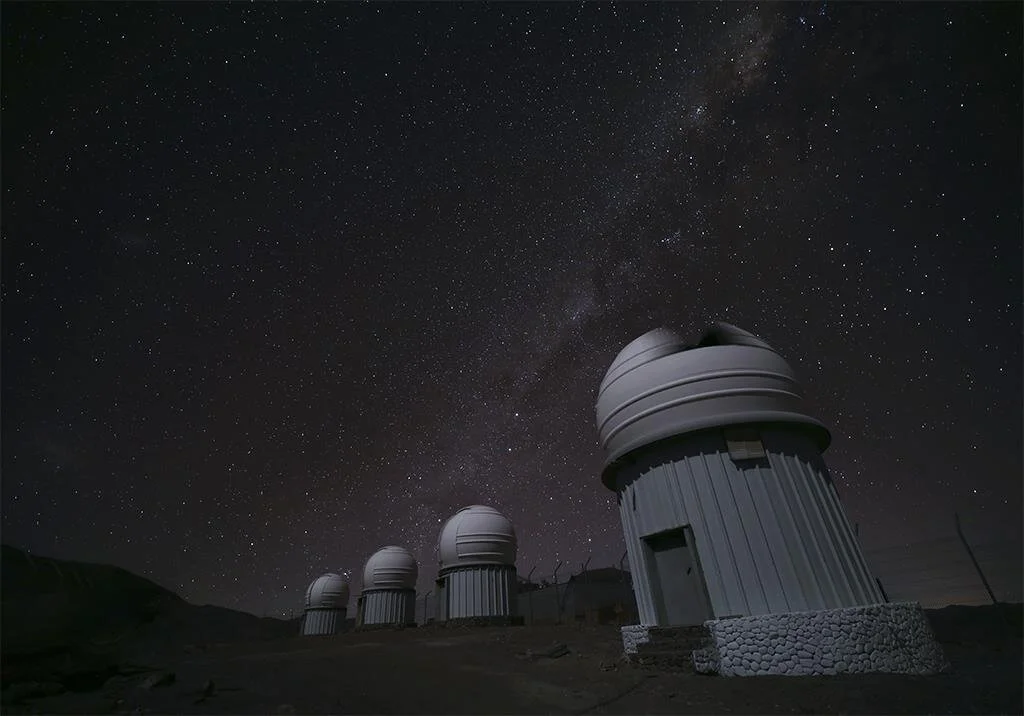
The 1-meter telescope at work © Elke Schulz
The minimum rental period for a telescope is 30 minutes, which can be increased in 10-minute intervals. The prices depend on the respective instruments and range, for example, from 20 USD for the VST, 30 USD for the ASA Newtons to 100 USD for the 1-meter telescope for a 30-minute time frame. The payment system at Chilescope is based on so-called points, where one point corresponds with one USD. After you made your payment via PayPal, the respective amount will be credited to your profile as points. As astrophotographers well know, astrophotography, especially advanced astrophotography, is susceptible to mishaps and glitches.
These can be caused by the weather, technology, hardware or software, or any combination of these elements. For this reason, Chilescope offers a number of refunds, including very poor seeing (FWHM over 3"), blurred stars, poor guiding or positioning errors. Refunds can be received as points or can be credited to the respective PayPal account.
If you would like to get an idea what kind of images have been produced with the help of Chilescope and their instruments, you can find them in Chilescope's own gallery as well as on the renowned NASA website "Astronomy Picture of the Day" (APOD).
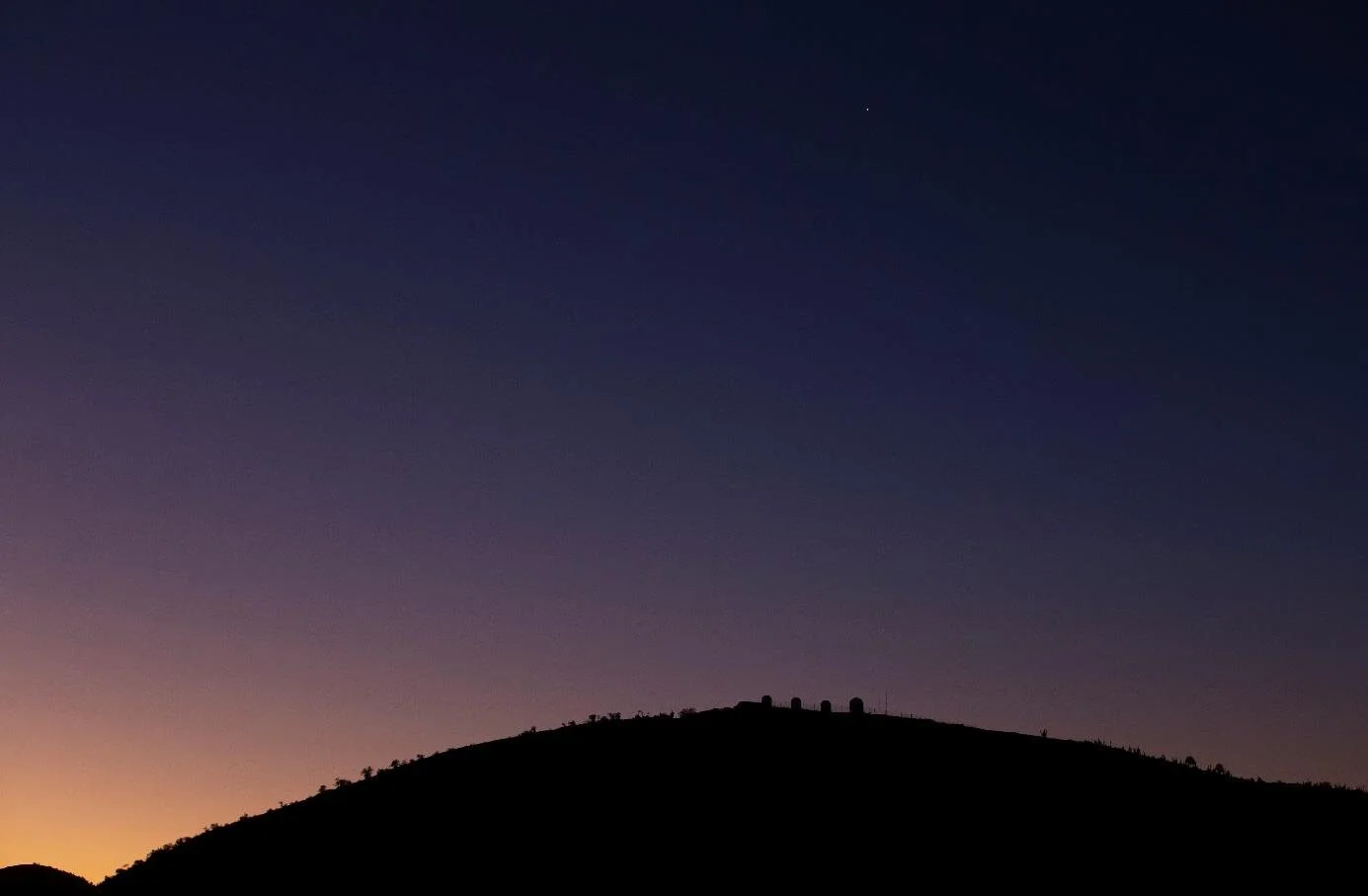
Venus shines above the observatories © Elke Schulz
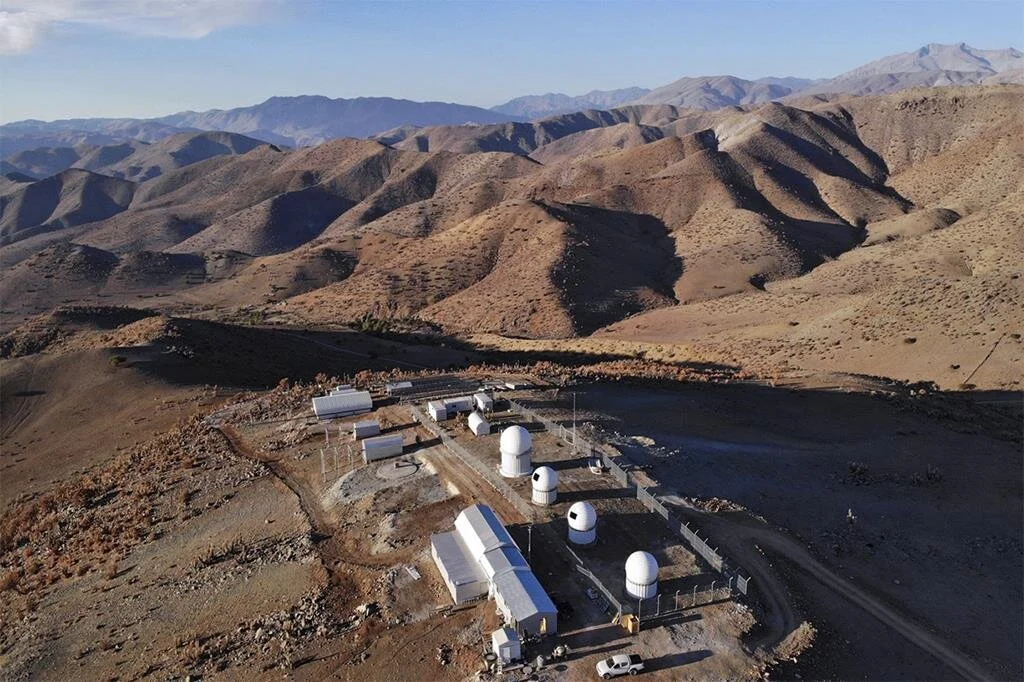
On the right you can see the Chilescope facility with the distinctive fence, on the left the buildings of the El Sauce observatory. © Vicente Fontana
The Mountain Top Coordinates: W 70‘ 45“, S 30‘ 27“ Altitude: 5249 ft
Clear Nights/Year: ca. 300 SQM: 21,8 Seeing: below one arc second Observatory El Sauce Website: www.obstech.cl E-Mail: info@obstech.net Contact: Dr. Vincent Suc Communication available in: English, Spanish, French News: www.facebook.com/obstechelsauce Observatory Chilescope Website: www.chilescope.com E-Mail: support@chilescope.com Contact: Sergey Pogrebisskiy Communication available in: English, Russian News: www.facebook.com/chilescope