Sean McCully
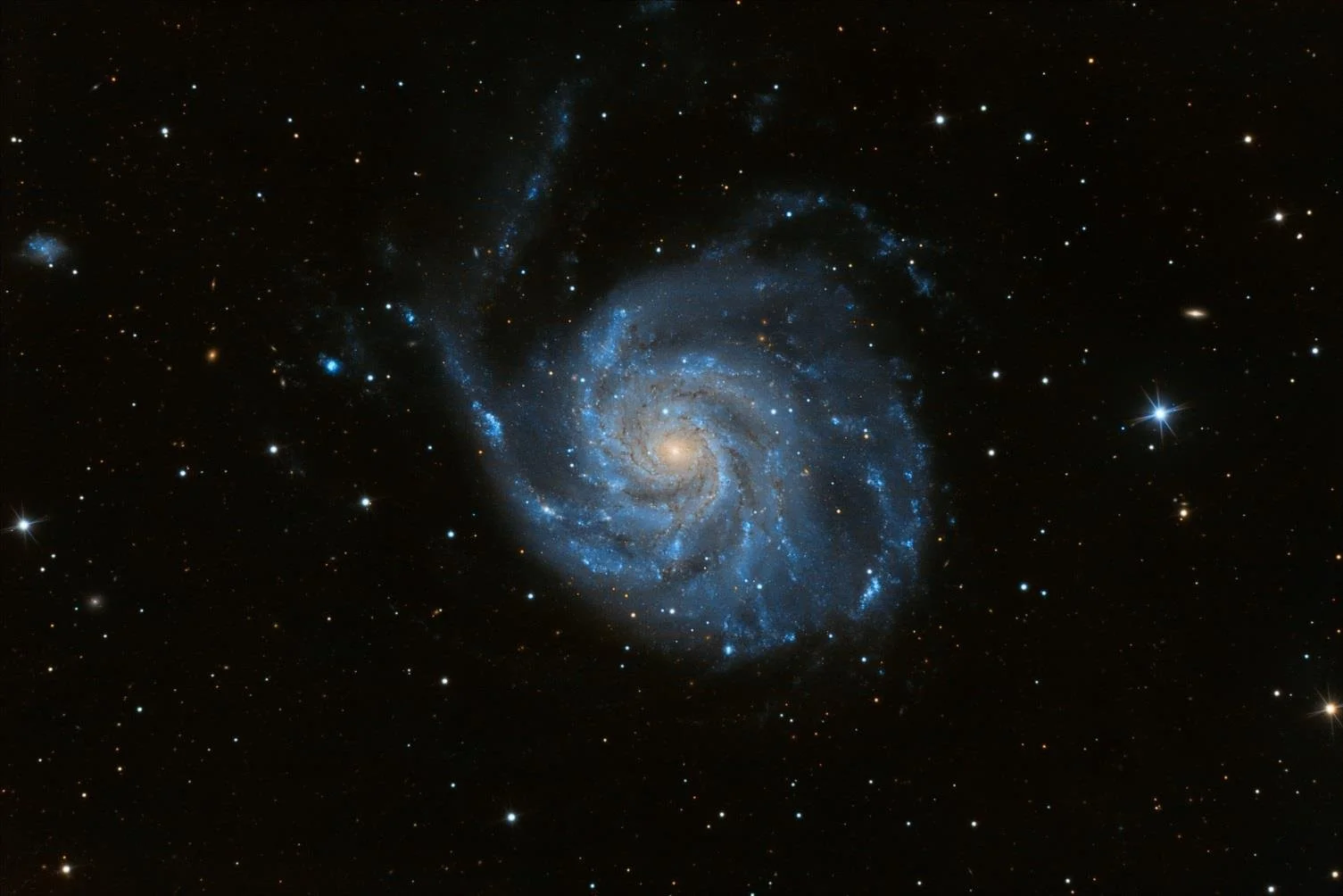
M101 Pinwheel Galaxy
Space has always held my fascination; the great expanse of everything can be an extremely sobering thought from this tiny spec of dust and rock we inhabit. It wasn’t until 2018 I really started to consider astronomy as a hobby; it all started almost by accident. I had been considering buying a telescope for almost a year at the point I purchased one without any real use of one prior. At the time it seemed like it might be something fun to do, such that I was able to convince Santa Claus (my Wife) that I should get a telescope for Christmas. She still laughs at the following events.
I had no idea how to use the Celestron EdgeHD 11. It came in a bundle with a Celestron mount and a StarSense AutoAlign camera. About a week after getting it, and not really knowing what I was doing, we put it in the back of the car and drove out to Markham Park in Fort Lauderdale for the South Florida Amateur Astronomers meeting. At the time, all I could see was a bright white circle that took up most of the view, and I really thought I was looking at a star or a planet, wasn’t sure what. Technically I was, it was just severely out of focus. The SFAA members showed me how to focus the telescope, point the telescope to Orion, the moon, so on. You may see why she still finds this story so amusing; over $4k worth of equipment and I didn’t have any clue how to use any of it.
They also gave me some compelling advice that probably transformed the way I was able to use my new equipment. One of the first things they said, was to return the Celestron mount, and buy a GEM mount. Even if I never did astrophotography (which at the time I knew absolutely nothing about) it would be about the same price and an overall better mount.
Over the next several hours I asked questions and they patiently explained all the different things from electronic assisted astronomy, astrophotography, how to view planets, eyepieces, polar alignment, how filters work, etc. This was my first step as an Amateur Astronomer.
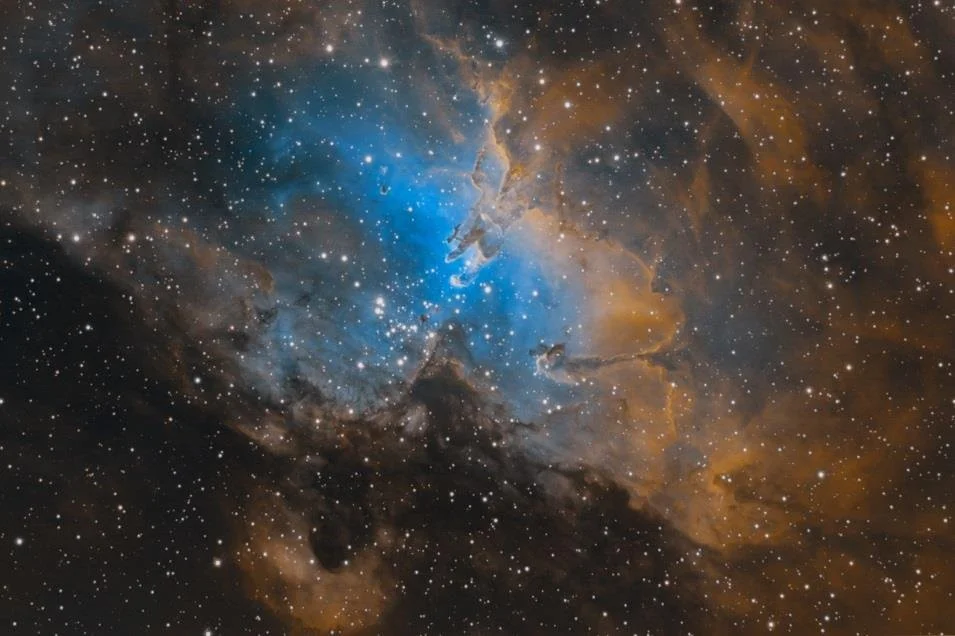
M16 Eagle Nebula
Over the next few weeks, as I looked for new objects to point my telescope at, I became more and more fascinated by the wondrous things I could see and I wanted to see more. For every hour I wasn’t peering through my eyepiece I spent trying to figure out how I could take pictures with my telescope. At first, I tried a cheap DSLR and I was never able to get much out of it. I eventually moved to getting a mono camera, with a filter wheel, guide camera, and filters I was able to buy used from a classifieds ad. I probably spent 3 months before I finally figured out how to get focus and guiding working and a useable picture.
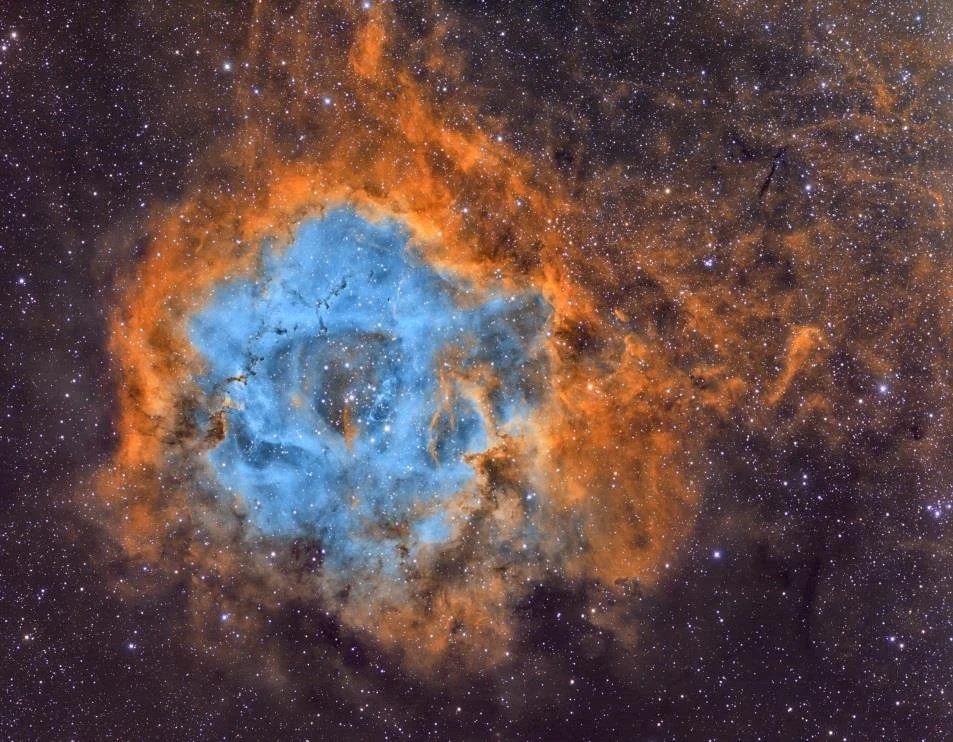
NGC2244 Rosette Nebula
Nobody recommends starting out learning astrophotography with such a long focal length like the EdgeHD 11 F10 for a reason; it’s not a simple task, which is why I probably bought the RASA 11 next. While the Celestron RASA 11 F2 has some real quirks that make it difficult to image with, I was able to start getting images that were easier to work with. This helped improve my processing skills and really start to get a better idea of what I needed to get better looking images.
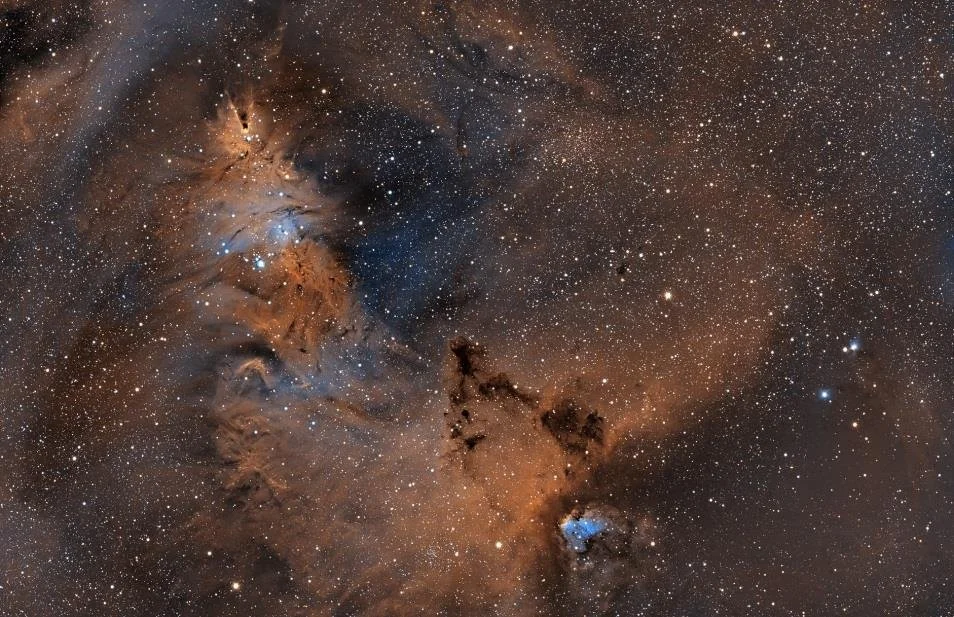
NGC2264 Cone Nebula
I built my backyard observatory this year, and I continue to make progress on learning about optics and attempting to become an ATM’er in my spare time as well. Building the observatory as a project was a lot of fun and hard work. One of the biggest decisions when undertaking a project like this are the ones spent in design. Anybody who aspires to do something similar, I would strongly recommend to spend as much time thinking about how you plan to use it, especially if you are going to build it yourself as I did.
While I didn’t design the specs myself, I utilized blueprints from Backyard Observatories (https://backyardobservatories.com).
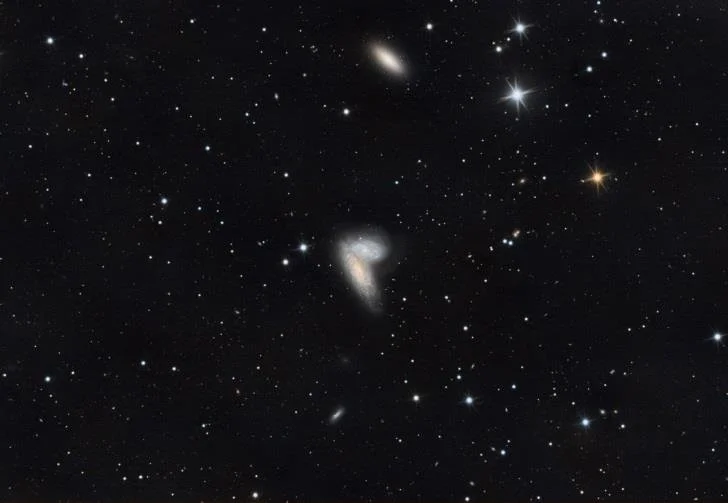
NGC4567 Butterfly Galaxies
However, I made some modifications to their design. The biggest one was making the far roof gable fold away such that the roof can roll off without hitting the telescope. I wanted to make sure that the walls on my observatory didn’t block too much of the horizon for me. The second one was using roller bearings along the roof support beam to help the Roof Runner move easier without catching against the wood. This was an optimization for using the Garage Roller wheels, instead of a v-block track which appears to be the better design.
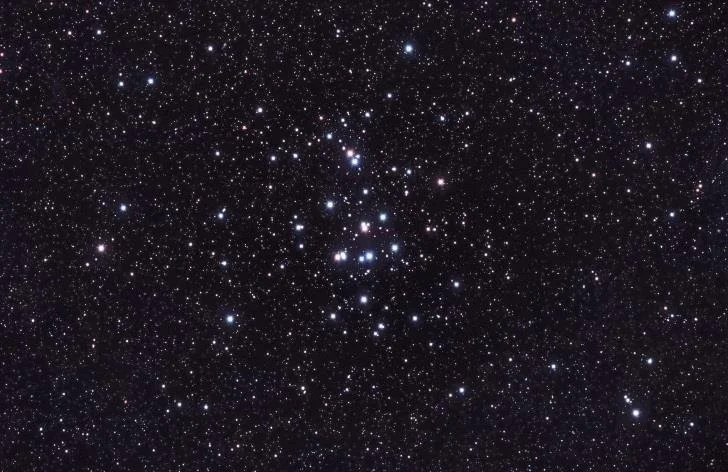
M44 Beehive Cluster
The observatory isn’t 100% finished; I need to automate most of it including finishing installing the Aleko Gate Opener and various Cloudwatcher and safety monitors so I can automate the roof opening and closing as well as come up with a way to make sure the Far Roof Gable can be motorized to fold up and down when the roof needs to open or close. These are the kinds of things I like working on and coming up with solutions.
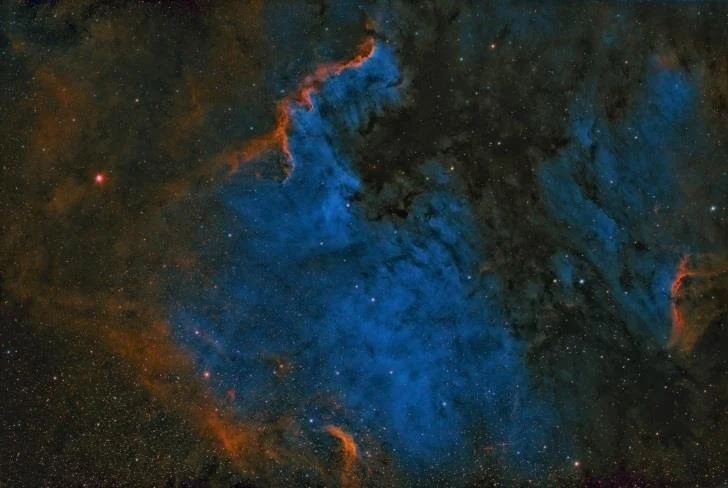
NGC7000 North American Nebula
Astrophotography has always been a journey for me, and part of that journey is making incremental progress. I am always looking for ways to take better pictures, and the easiest thing to do with these big light buckets is to clean the corrector plates on my RASA and EdgeHD, and the filters I am using in either of them. I’ve gone through multiple cleaning procedures, and have tried everything under the sun. Cleaning solutions from other photonic and lens companies do a good job, but nothing is as good as First Contact Polymer. Not only does it clean glass better than other solutions, its extremely easy to use and you don’t have to worry about mess ups or scratches.
Sean McCully
AstroBin (https://www.astrobin.com/users/smccully/)
CloudyNights (https://www.cloudynights.com/user/303920-smccully/)