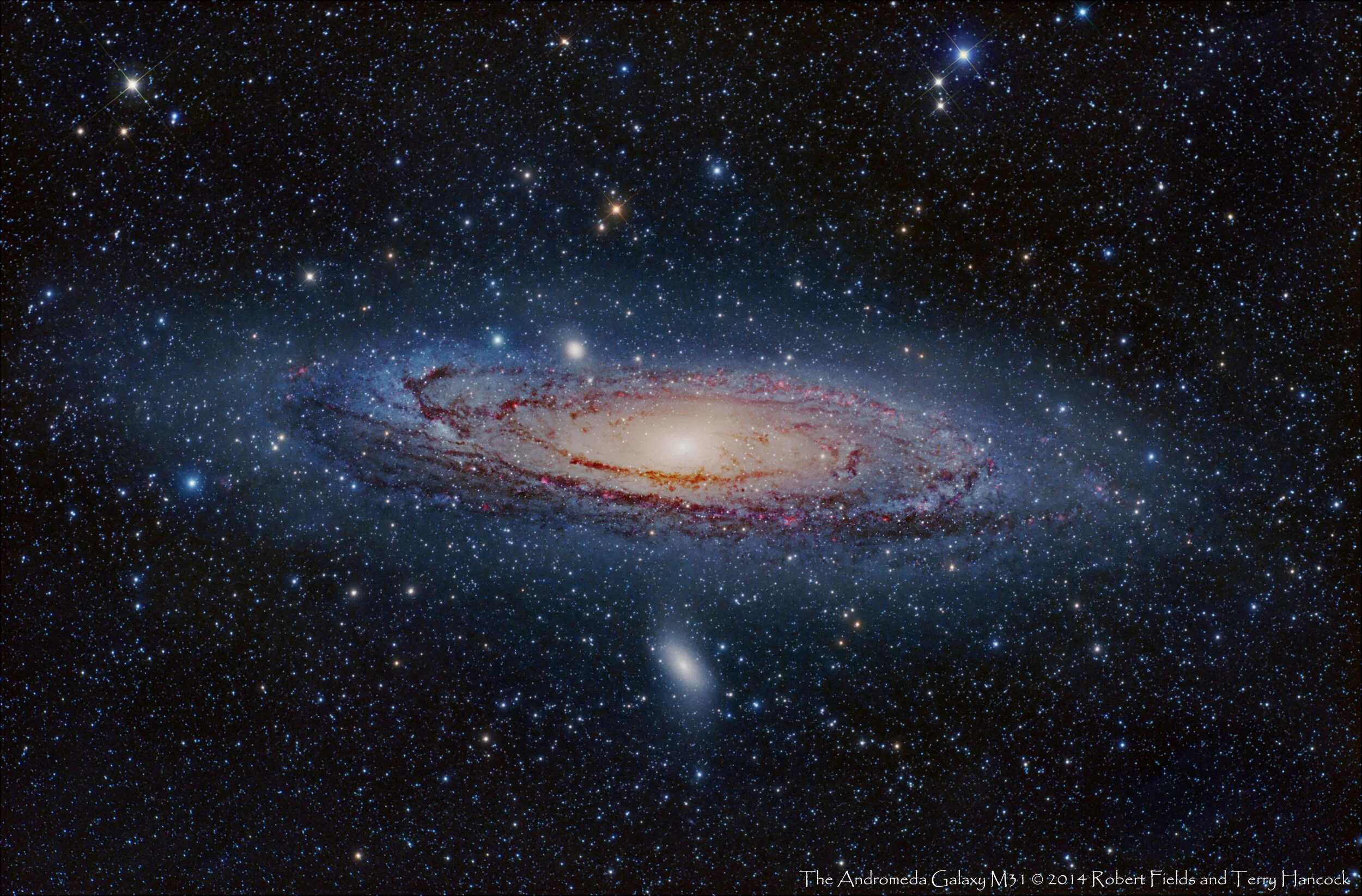
Top 5 Andromeda M31 Images that have been forwarded to us over the past few years.
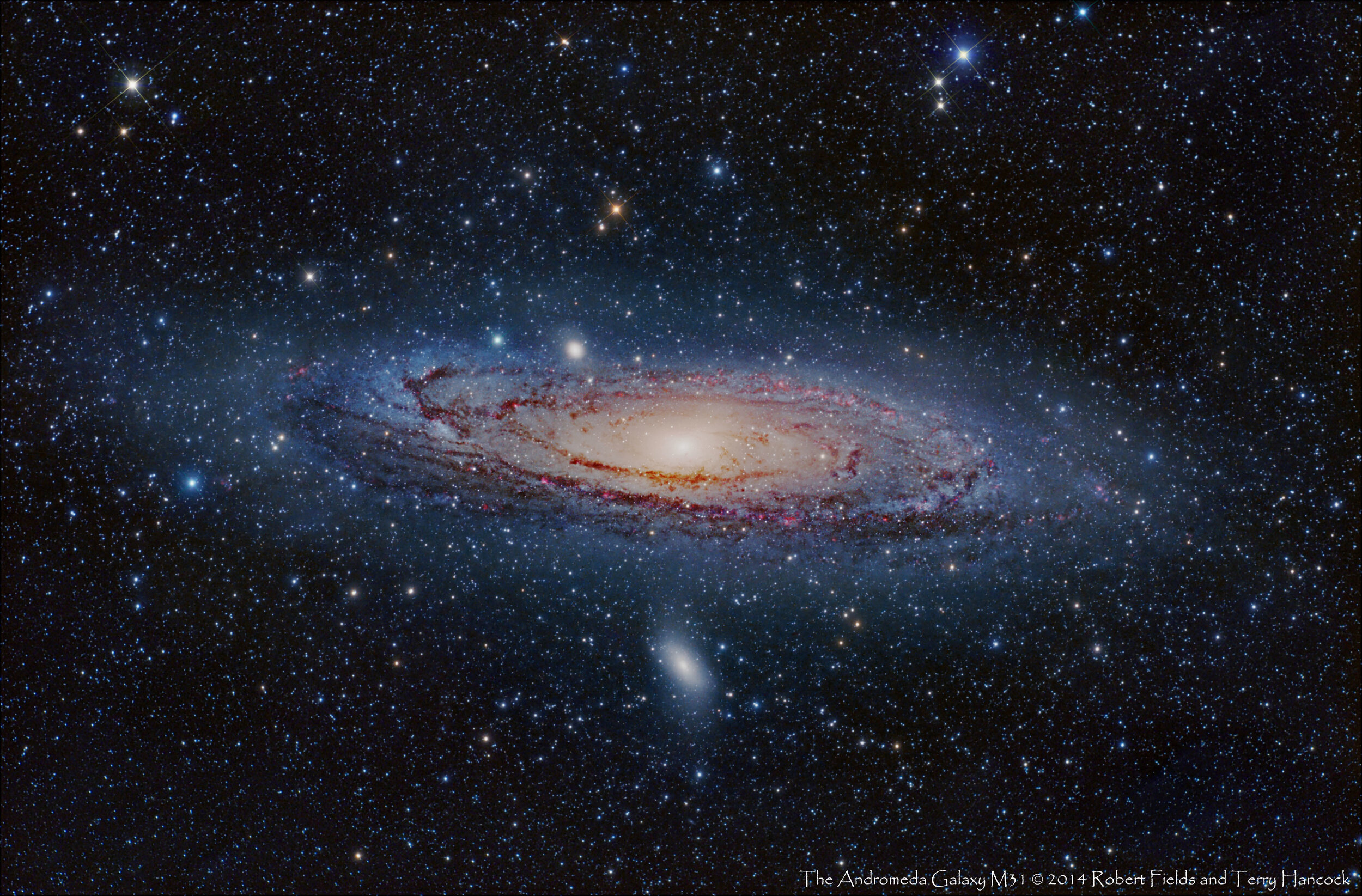
Image by Terry Hancock
This is a composition of data collaborated by Robert Fields of Irvington Observatory Howell MI and Terry Hancock of Downunder Observatory Fremont, MI.
Total Exposure time 24.2 hours
Image details
Robert Fields
Location: Irvington Observatory, Howell MI
H-Alpha 100 min
RGB 160 min each
Luminance 400 min
Camera: SBIG ST11000 monochrome CCD
Optics: Takahashi FSQ 106 APO Refractor
Astro-Physics AP900 German Equatorial Mount
Image Aquisition software Maxim DL5
Registed, Calibrated and Stacked in CCD Stack
Post Processed with Photoshop CS5
Image details
Terry Hancock
Location: DownUnder Observatory, Fremont MI
H-Alpha 270 min
RGB 150 min
Luminance 55 min
Camera: QHY11 monochrome CCD
Optics: TMB92SS F5.5 APO Refractor with TS 2.5" Field Flattener
Paramount GT-1100S German Equatorial Mount (with MKS 4000)
Image Aquisition software Maxim DL5
Registed, Calibrated and Stacked in CCD Stack
Post Processed with Photoshop CS5
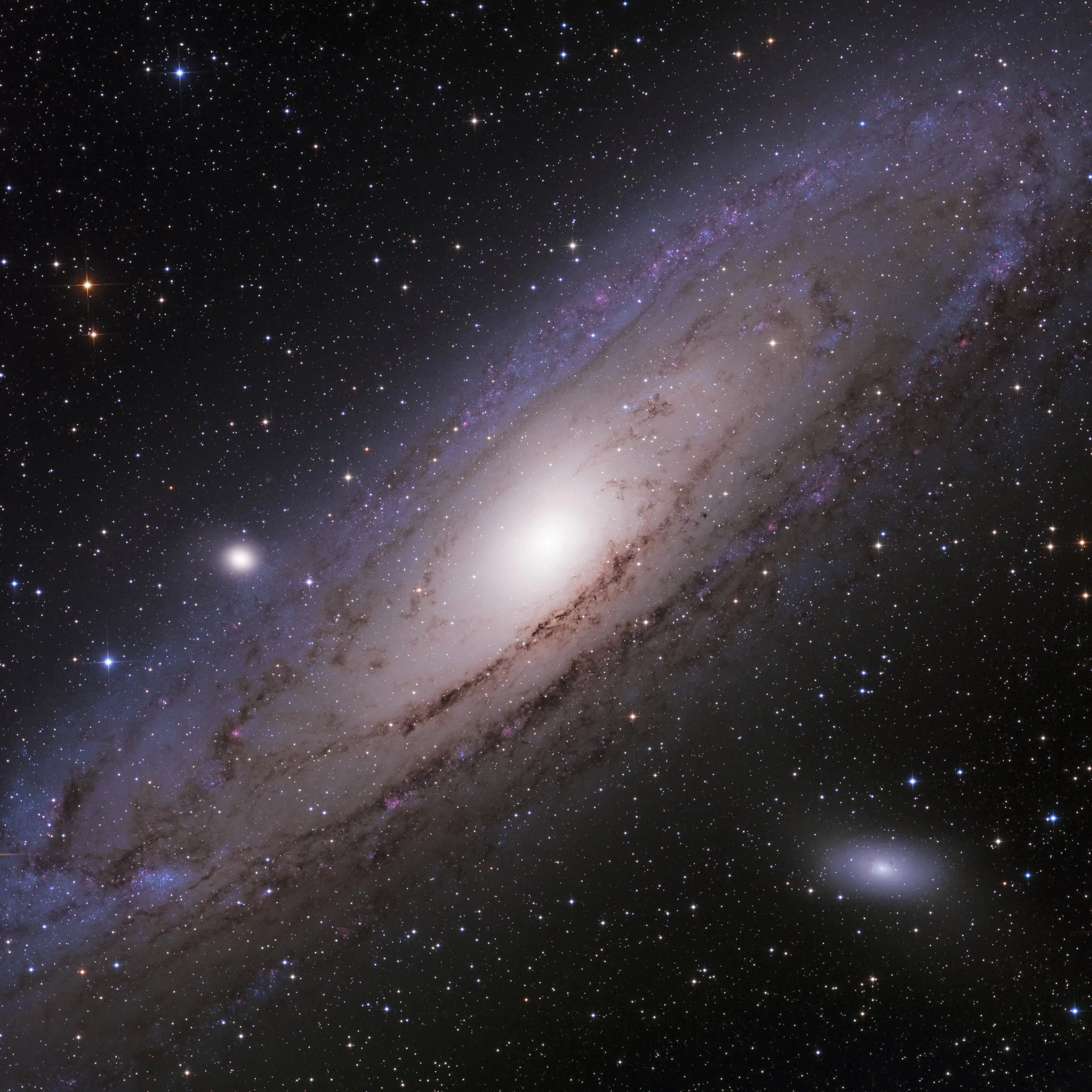
Image by Rick Stevenson
M 31 - the Andromeda galaxy
Captured at SRO, California from 17 Sep - 30 Oct, 2015
Objects in image:
M31, M110, M32, NGC206
Scope: Ceravolo C300 @ f/4.9 = 1470mm FL
Mount: AP1100
Camera: FLI PL16803
Focuser: Atlas
Filters: Astrodon
Guiding: Lodestar II / Tak guide scope
Image scale: 1.26 arcsec/pixel
Exposures: 20x1200s + 6x60s R, 17x1200s + 6x60s G, 19x1200s + 6x60s B, 27x1800s Ha (~32.5 hours)
Processing: PixInsight 1.8
Acquisition credit: John Kasianowicz, Daniele Malleo, Leonardo Orazi, Rob Pfile, Rick Stevenson and Jerry Yesavage.
Processing credit: Rick Stevenson
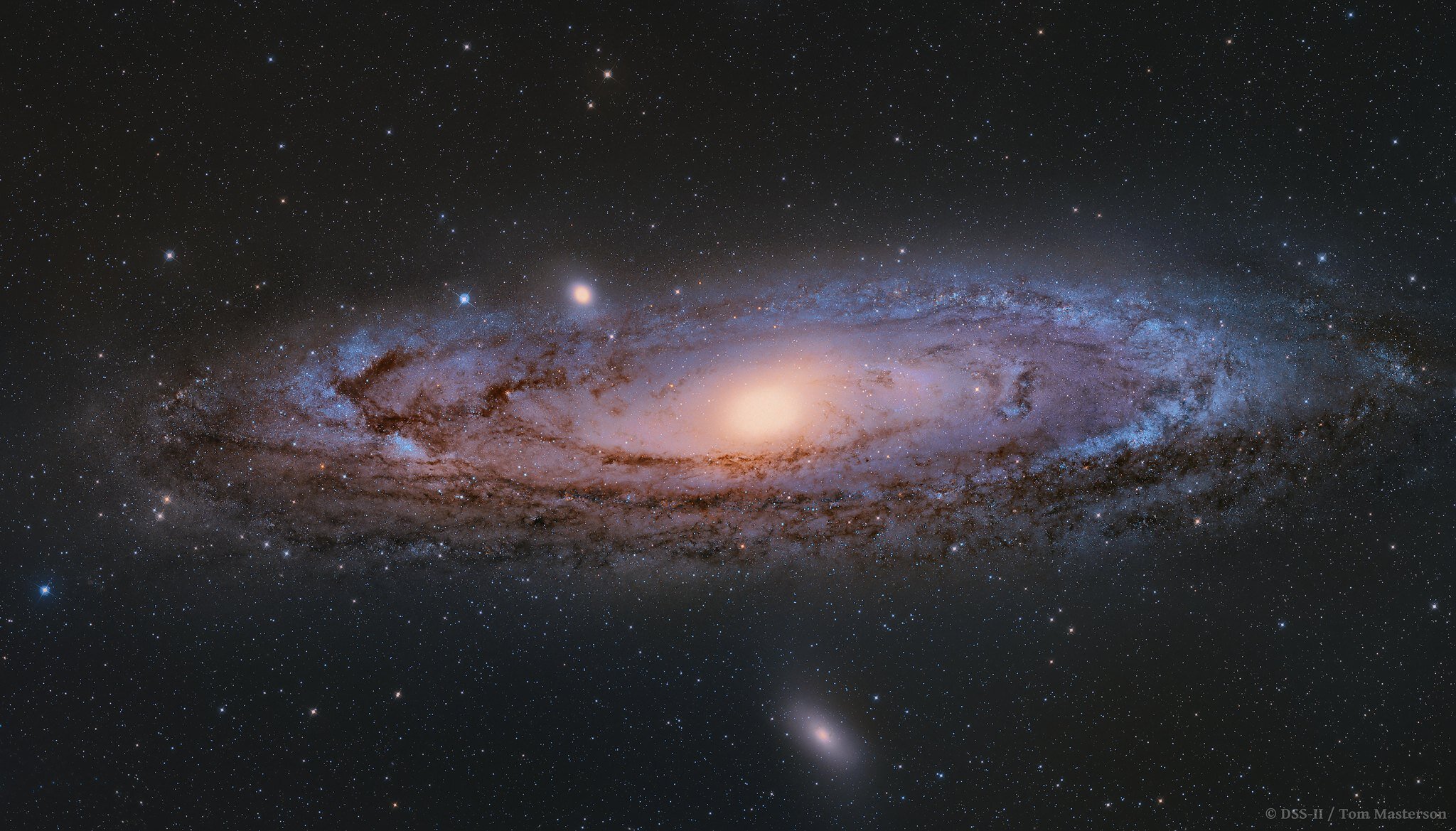
Image by Transient Astronomer
Andromeda Galaxy M31 DSS-II
Our largest galactic neighbor and the most photographed galaxy in the night sky the Andromeda Galaxy is an impressive object. In this image using amazing professional data from the Digitized Sky Survey-II you can really see the detail in this awesome example of a barred spiral galaxy. The 48" Oschin Telescope used to collect the blue and red chemically exposed plates for this image is still in use at Palomar Observatory in Southern California. Along with it's southern hemisphere counterpart the UK Schmidt Telescope, the Digitized Sky Survey information covers 98% of the night sky in red, 45% in blue, and 99% in infrared.
Andromeda Galaxy Wiki: en.wikipedia.org/wiki/Andromeda_Galaxy
Digitized Sky Survey Wiki: en.wikipedia.org/wiki/Digitized_Sky_Survey
Palomar Observatory Sky Survey info: www.astro.caltech.edu/~wws/poss2.html
UK Schmidt Telescope info: www.aao.gov.au/about-us/uk-schmidt-telescope
Technical Info:
ESO DSS Archive: archive.eso.org/dss/dss
6x 1 Degree Red Plates
6x 1 Degree Blue Plates
RGB image created using a 50/50 blend of red and blue for green.
Processing: FitsLiberator, Registar, Photoshop CC
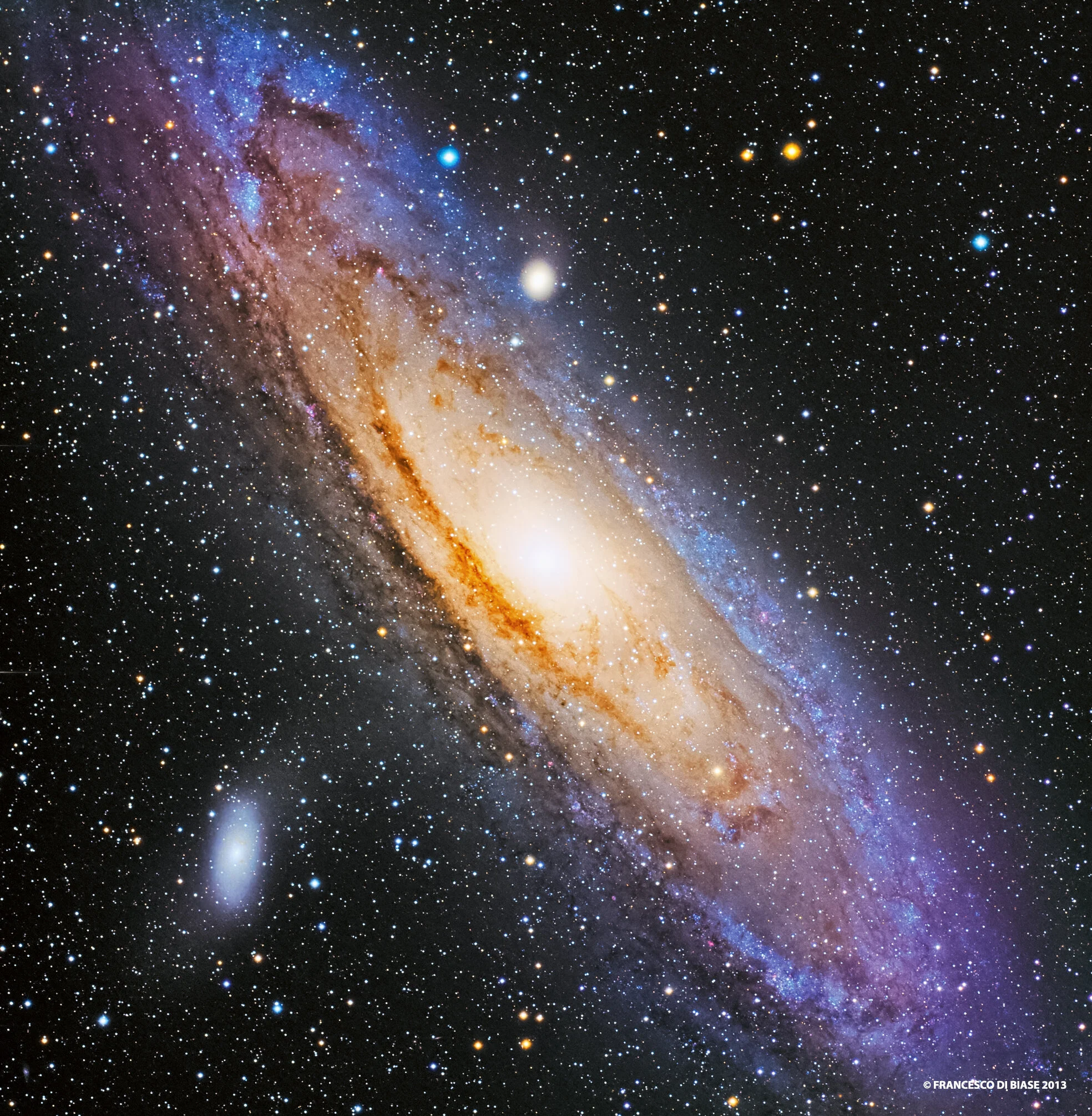
Image by Francesco di Biase
M31 Andromeda Galaxy LRGB
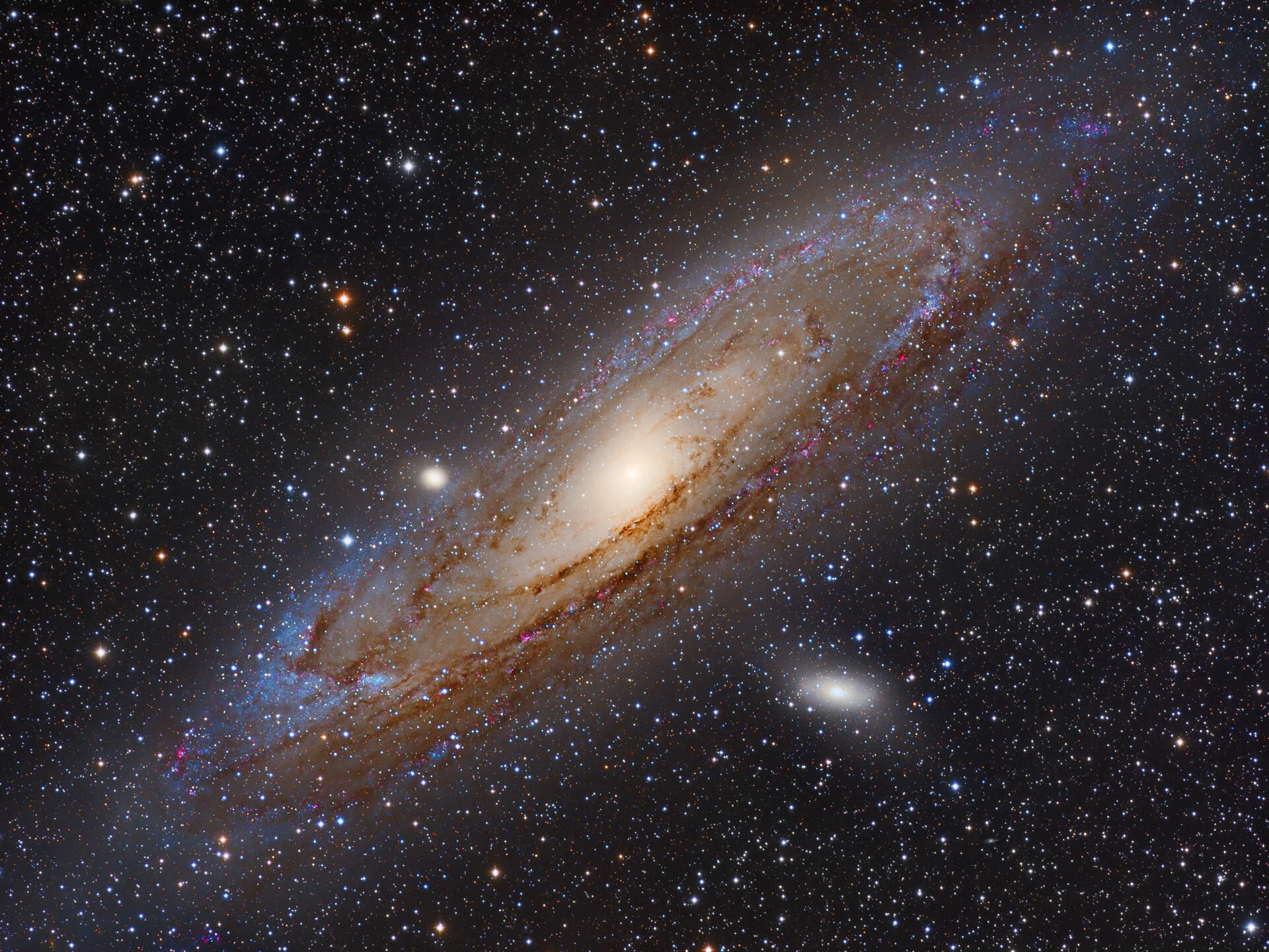
Image by Leonardo Orazi
M31 - The great Andromeda Galaxy
FULLRES at:
Optics:
Takahashi FSQ-106EDXIII F/3.6 383mm. - APO Refractor
Mount:
AP Mach1 GTO
Camera:
QSI-683WSG
Filters:
Astrodon E Series Gen II LRGB 31mm
Guiding Systems:
SX Lodestar
Dates/Times:
9/12 October 2012
Location:
Castelmagno - Cuneo / "Val Troncea" - Pragelato - Italy
Exposure Details:
L:R:G:B => 220:120💯120 = > (22x10):(12x10):(10x10):(12x10) All Bin1 [num x minutes]
Cooling Details:
-25 °C
Acquisition:
Maxim DL/CCD, Perseus
Processing:
CCDStack2+, PixInsight, PS CS5
Mean FWHM:
1.57/1.98
SQM-L:
21.35/ 21.33
space the final frontier, Tom Chitson and 25 more people faved this
Hello, this is the blind astrometry solver. Your results are:
(RA, Dec) center:(10.6834275038, 41.2691962038) degrees
(RA, Dec) center (H:M:S, D:M:S):(00:42:44.023, +41:16:9.106)
Orientation:-89.63 deg E of N
Pixel scale:14.52 arcsec/pixel
Parity:Reverse ("Left-handed")
Field size :2.58 x 1.94 degrees
Your field contains:
NGC 205 / M 110
NGC 221 / M 32
NGC 224 / Great Nebula in Andromeda / M 31
View in World Wide Telescope
&creditsUrl=&ra=10.6834275038&y=600&x=800&rotation=-89.63&dec=41.2691962038&thumb=http://farm9.staticflickr.com/8467/8090042733_17c6624e86_q.jpg)