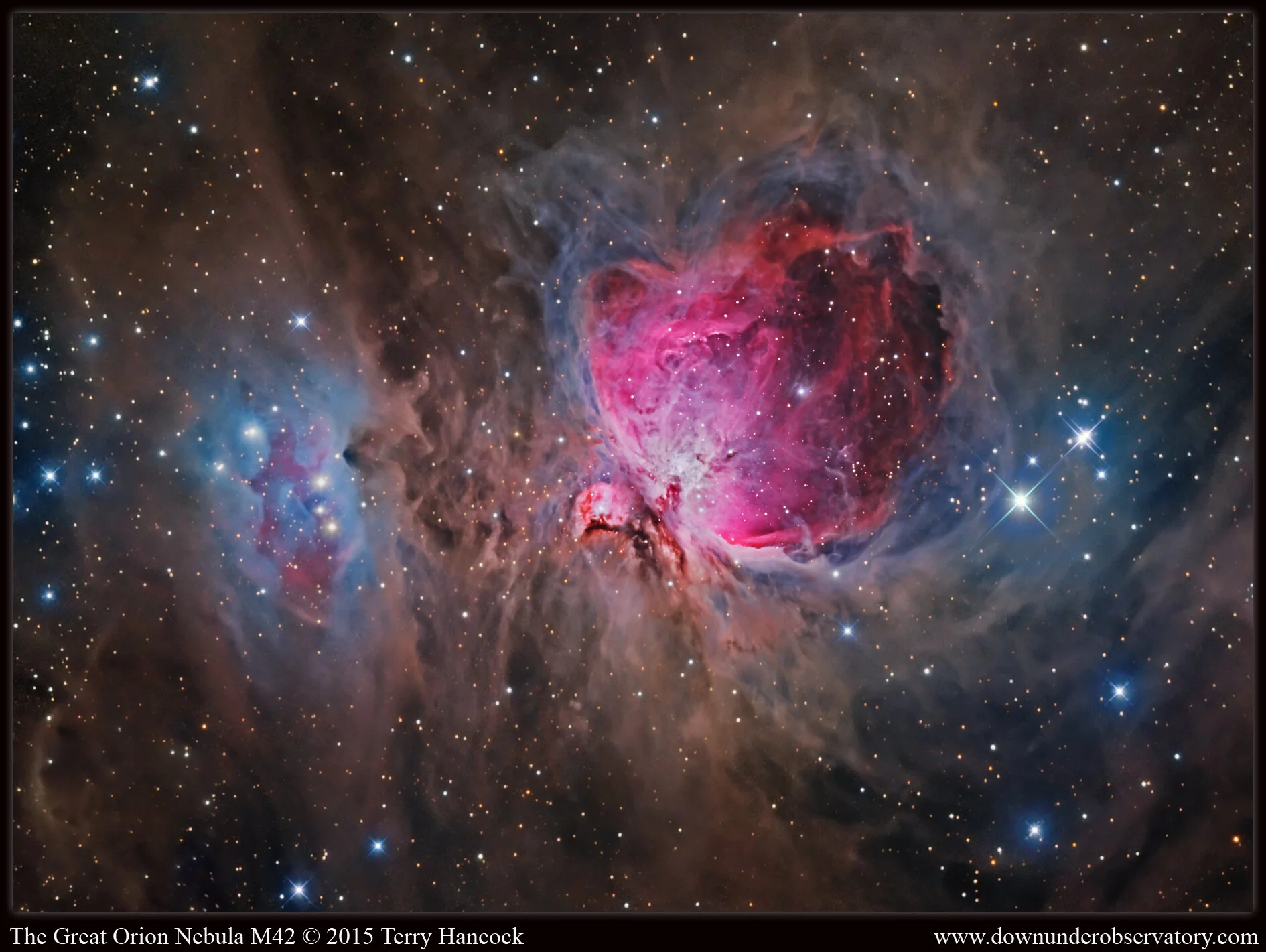
Our TOP 5 ORION NEBULA Images
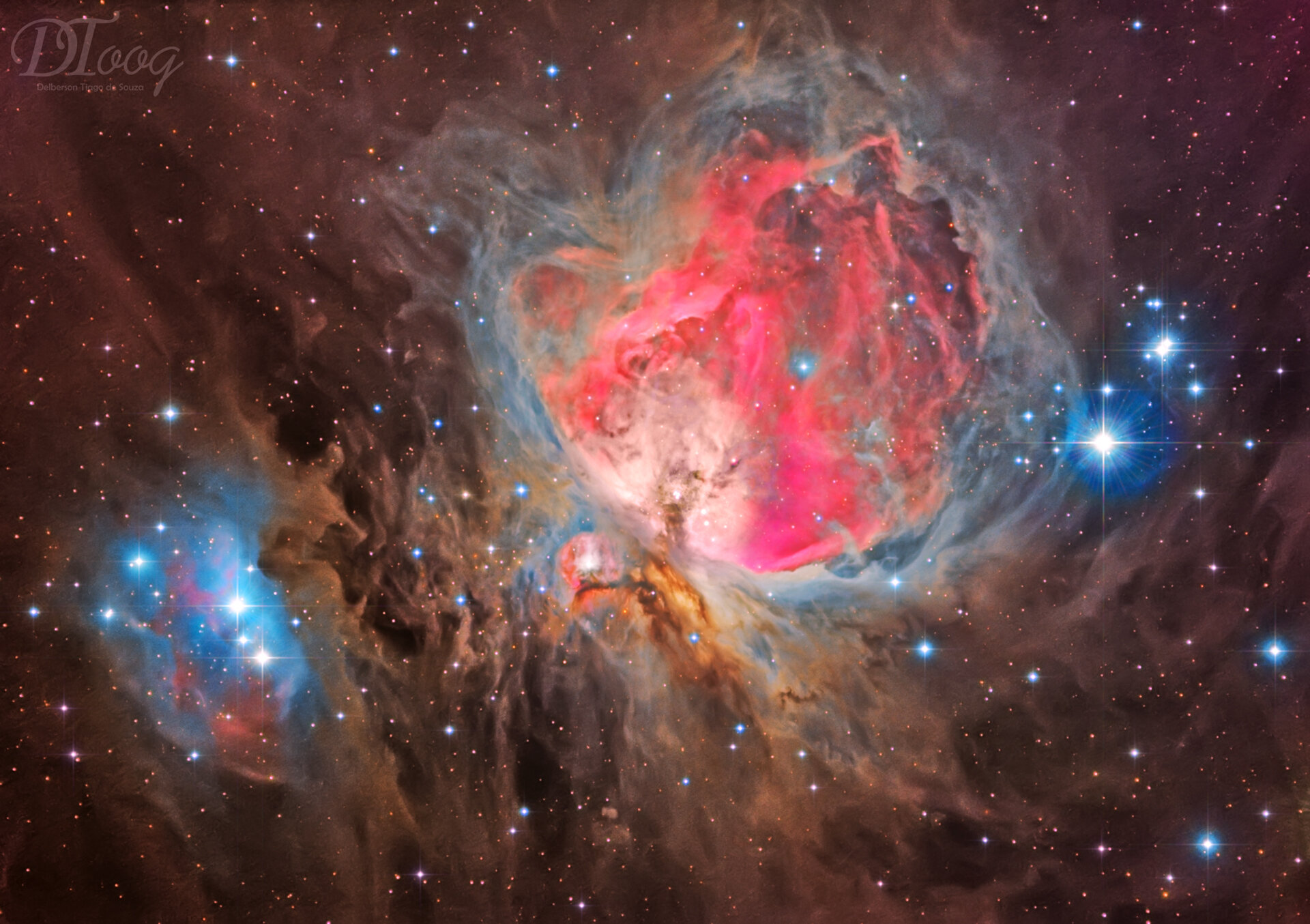
Image by Delberson Tiago de Souza
Orion's Great Nebula
* Setup:
Telescope: Refractor Orion ED80
Focal Length: 600mm
Camera: QHY163M
Mount: HEQ5 Pro
Filters: LRGB Optolong and H-Alpha 7nm Baader
Location: Silvânia / GO / Brazil
*Exposure:
Ha: 1.8 hour (subs 300s) bin1x1
R: 0.5 hour (subs 180s) bin1x1
G: 0.5 hour (subs 180s) bin1x1
B: 0.5 hour (subs 180s) bin1x1
Core: 10s subs
Total: 3.3 hours
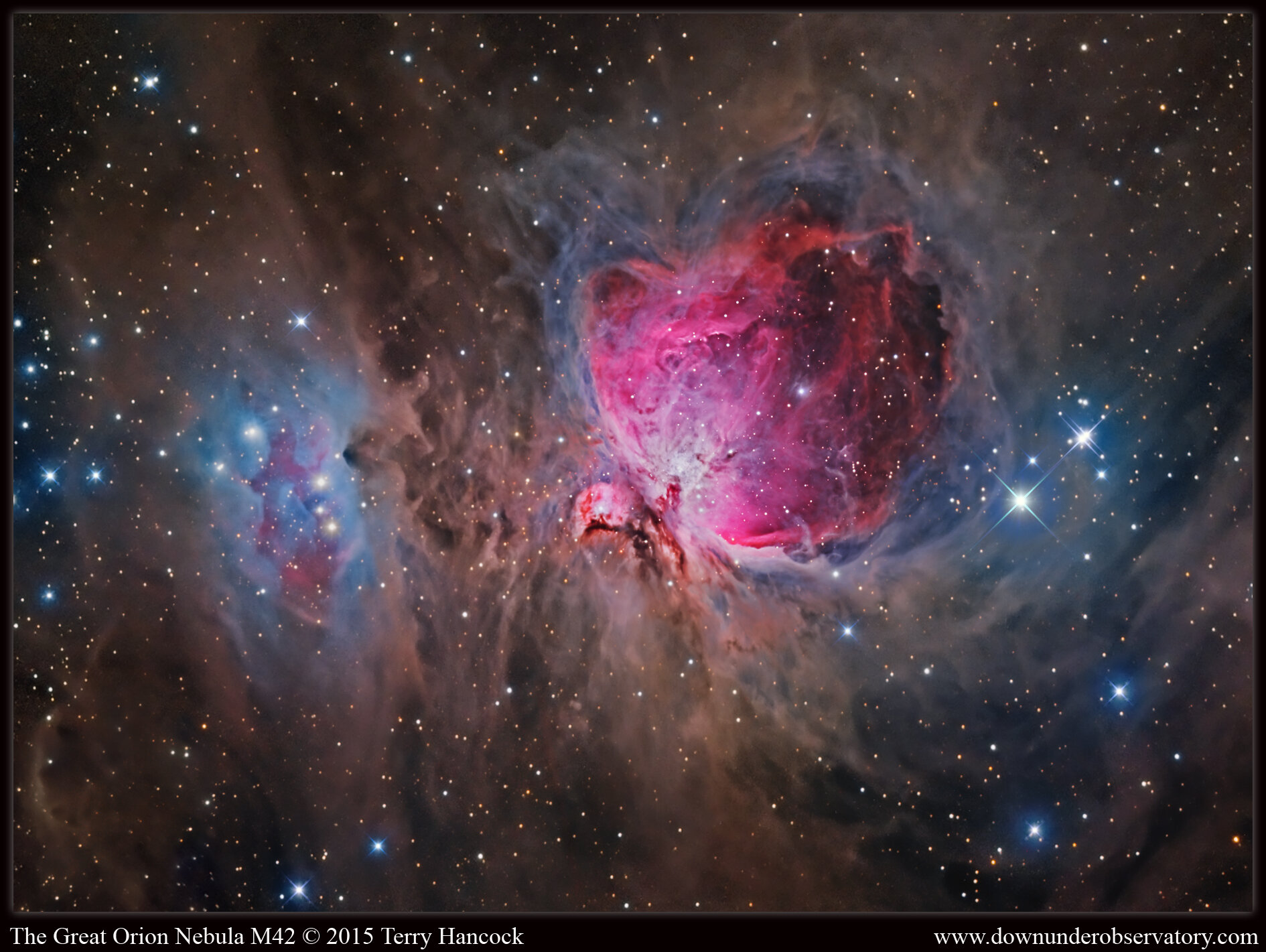
Image by Terry Hancock
The Great Orion Nebula M42
This is my third image in this new series combining data captured from Fremont, Michigan from 2010 through to 2014 using QHY9 and QHY11 Mono CCD’s, 5 inch TMB 130, TMB92 refractors and Takahashi E180 Astrograph and collected using LRGB + H-A filters.
The constellation of Orion is home to many treasures, including the Orion Nebula seen here. A small part of the immense Orion Molecular Cloud, M42 is perhaps the most studied extra-solar object in the sky.
It is so very close to the Earth, only 1350 light-years, that this star forming region has opened the door to our understanding the processes that create stars and planetary systems. Only 24 light-years across, The Orion Nebula contains at least 2000 newborn stars with many still forming.
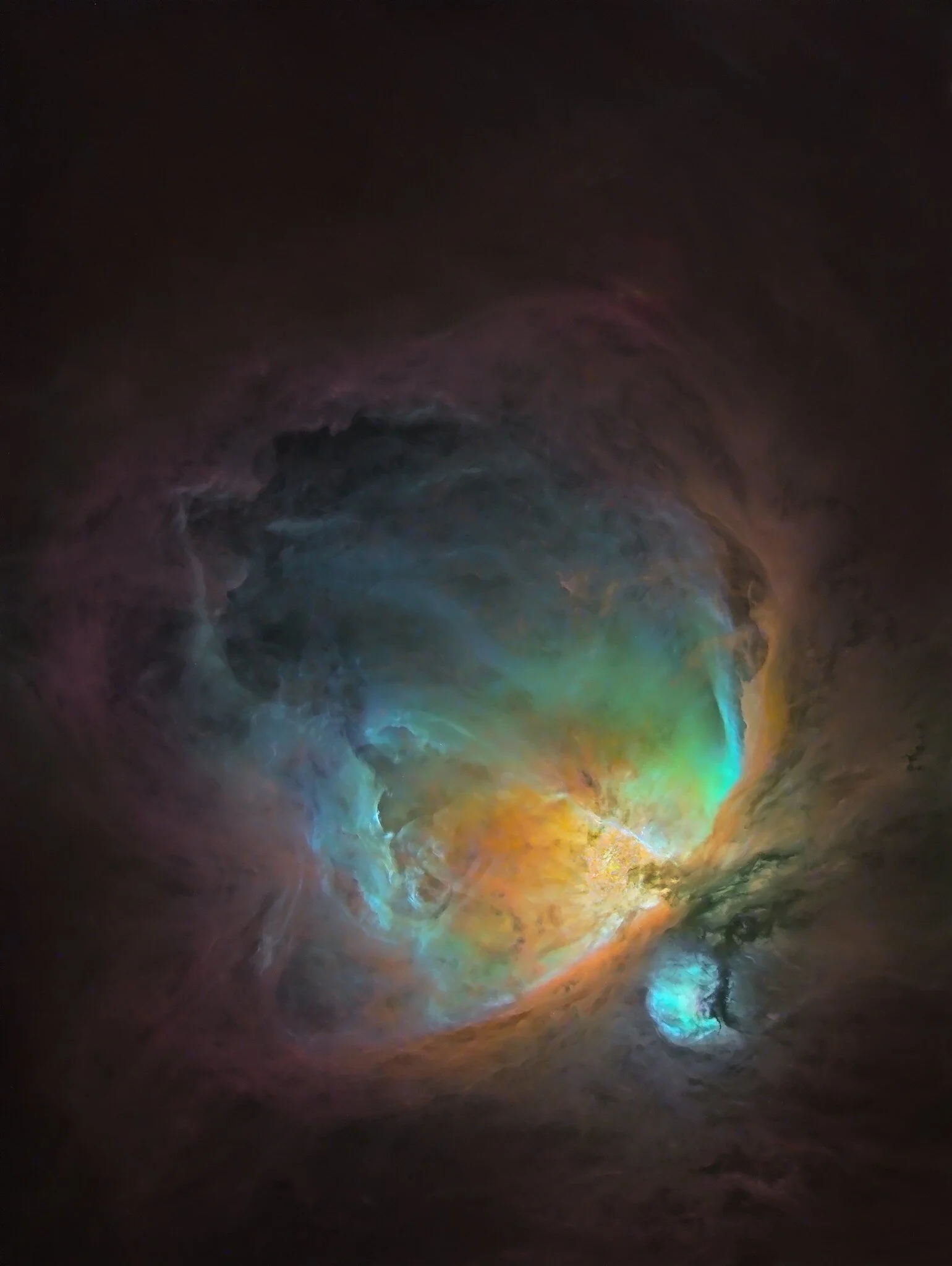
Image by Manuel Huss
The Orion Nebula in OHHS without stars
So I wanted to try something else. Since I have too much light pollution for deep LRGB exposures and I don't like the classic SHO Hubble palette on Orion, I went for an OH-H-S mix. To highlight the nebula's structure I removed the stars as well. Bottom line: more art than science, but I like it. :-)
Gear: TS 152/900mm achro & ASI 1600mmc pro
Exporsure about 15 hours in total
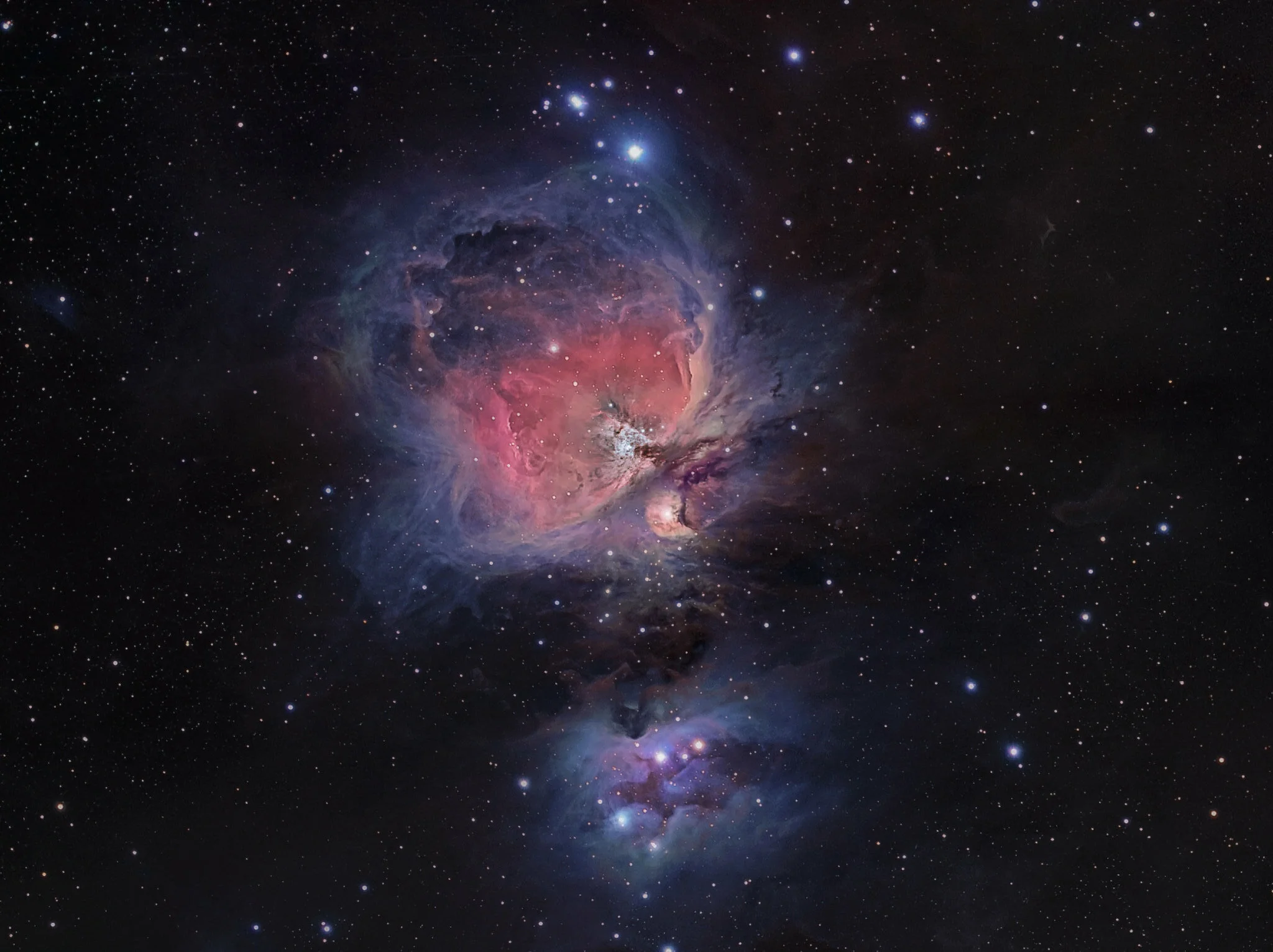
Image by Chuck Manges
Orion Nebula
M42 The Orion Nebula
Since we're currently getting buried in snow and there's no clear skies in sight, I decided to "practice" on M42. I used 6 panels from my latest hyperstar mosaic as luminance. www.flickr.com/photos/astrochuck/16138742249/
Combined color data from last years AT65EDQ/QHY9M image
www.flickr.com/photos/astrochuck/10848930723/
and core luminance from my QHY23M/11" EdgeHD @F/7
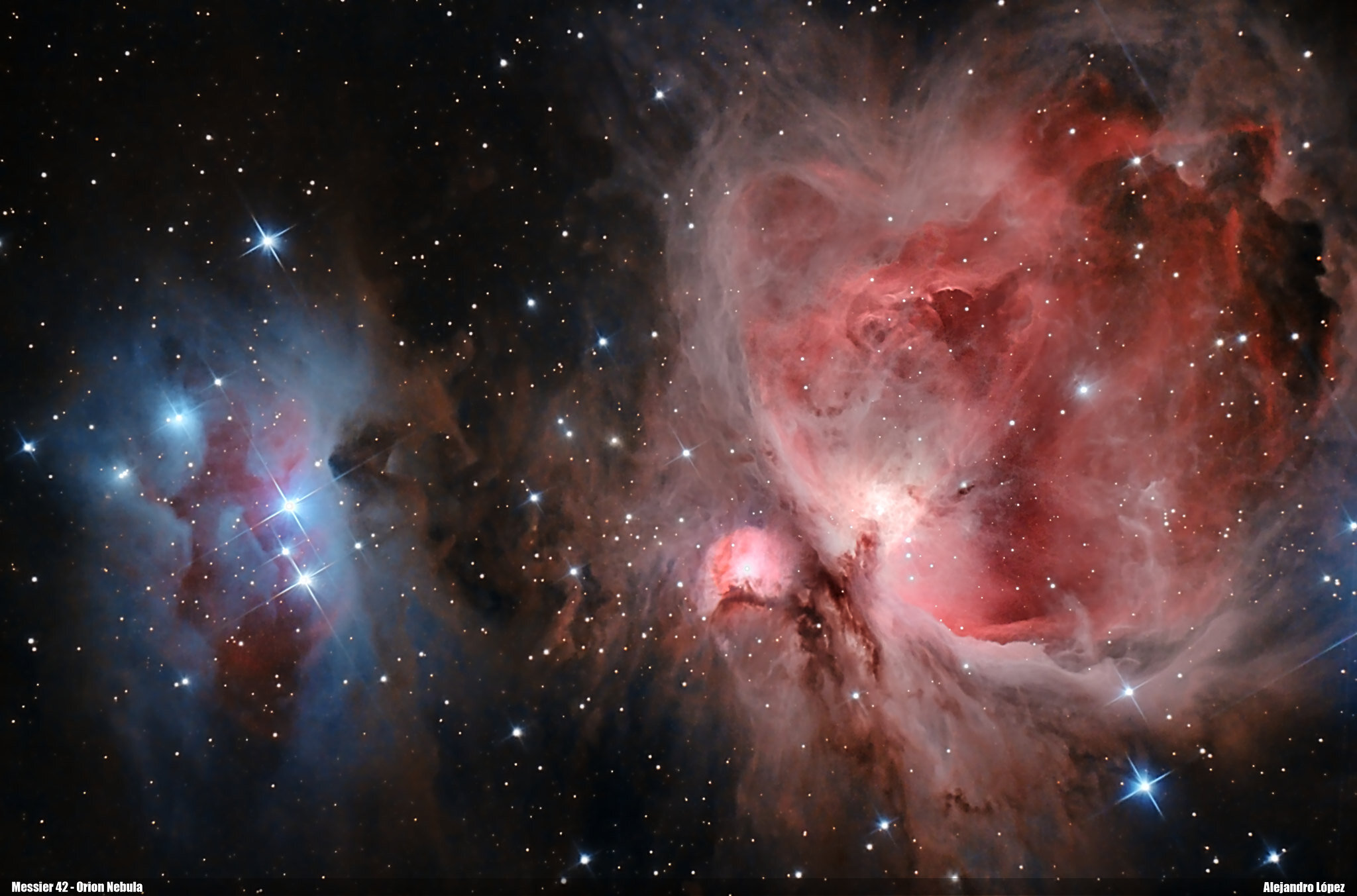
Image by Alejandro López
Messier 42. Orion Nebula. Reprocessed with Pixinsight