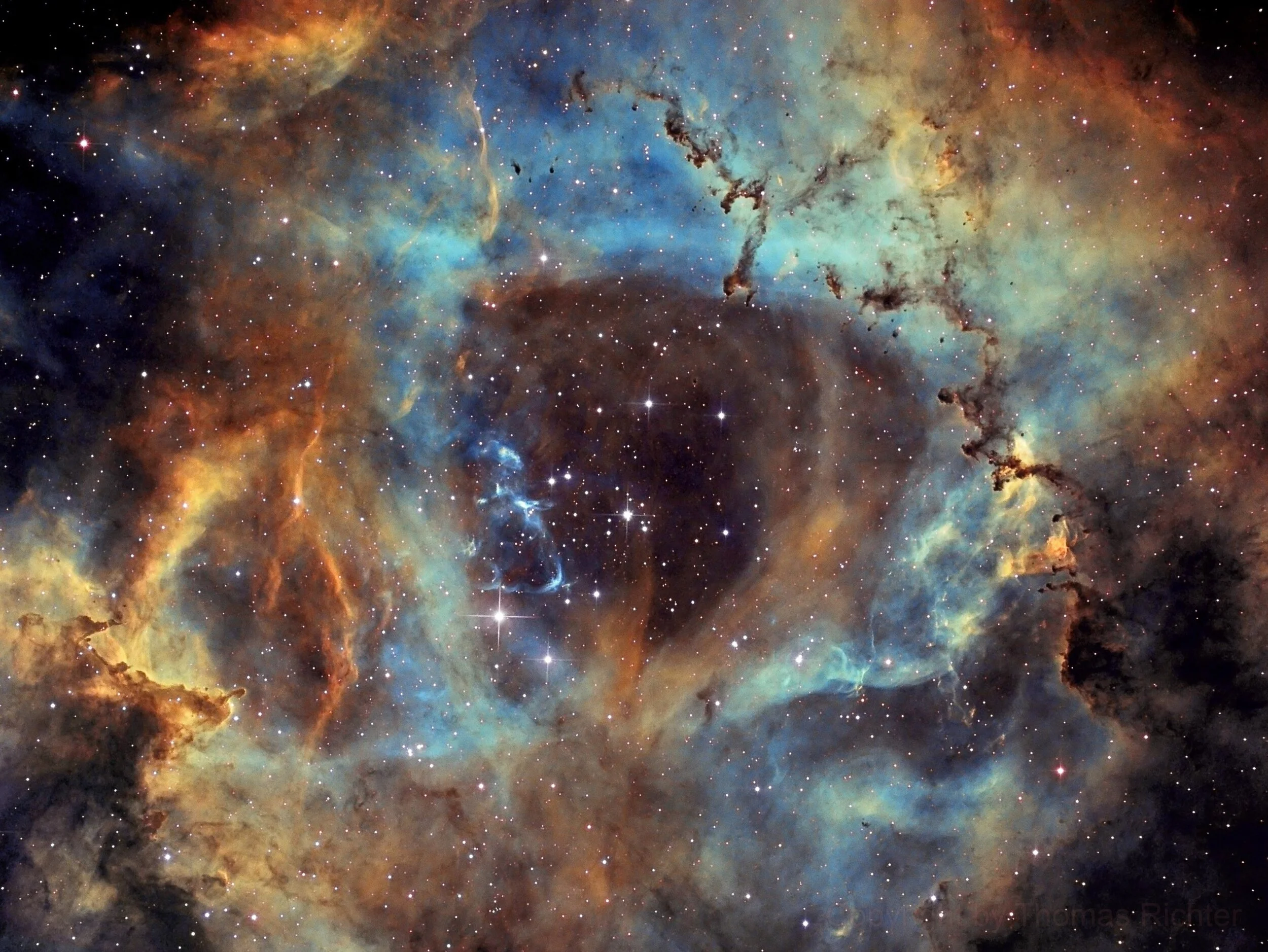
TOP 5 ROSETTE NEBULA IMAGES
We get sent a LOT of images to be published within the pages of the Amateur Astrophotography Magazine.
Here are just 5 of our favourite images of the Rosette Nebula we have been sent.
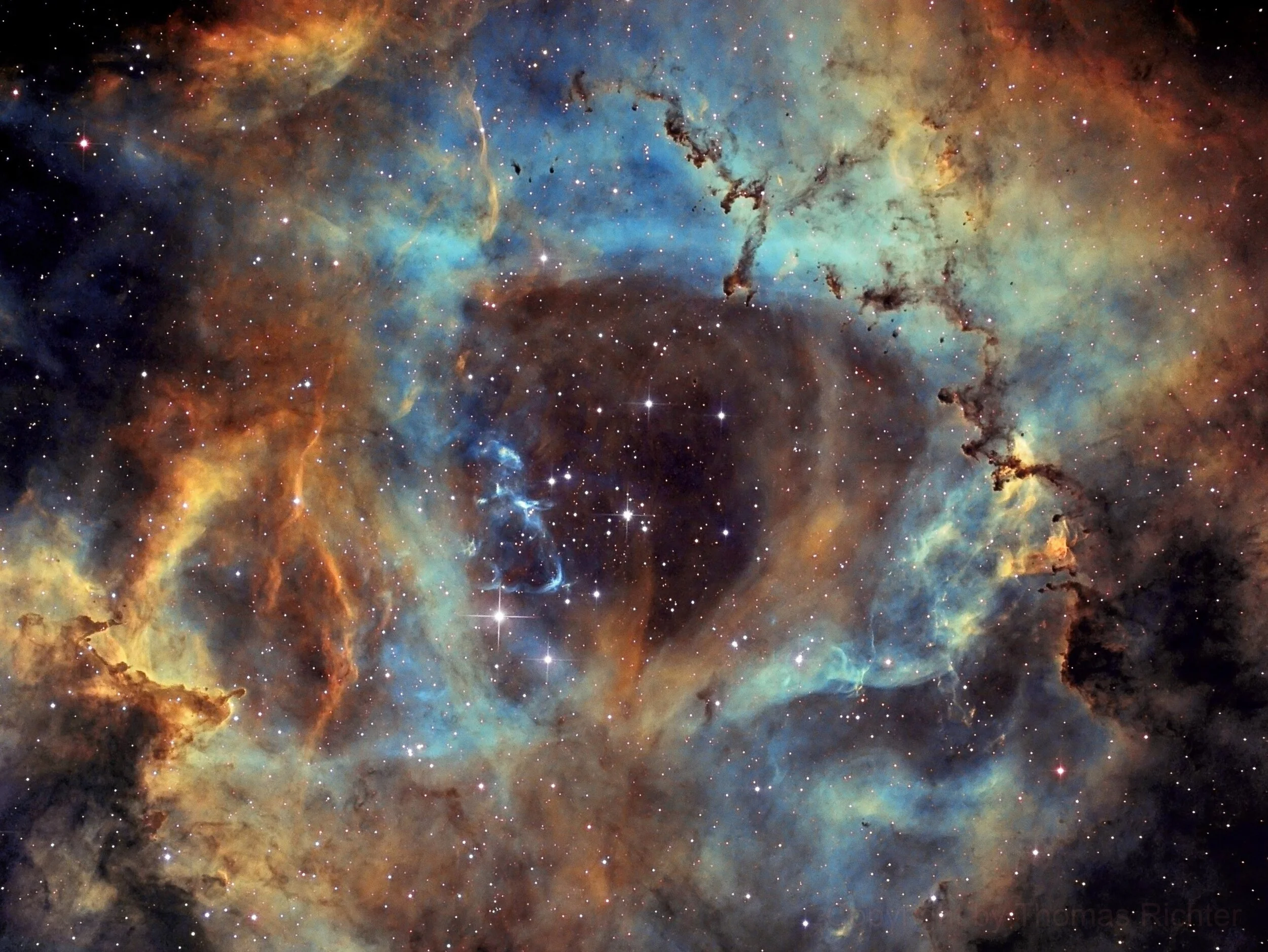
Image by Thomas Richter
Rosette Nebula - NGC2244 - SHO
Imaging telescope or lens:GSO 8" f/5 Newton
Imaging camera:Moravian G2-8300FW
Mount:SkyWatcher NEQ6 Pro Goto
Guiding telescope or lens:GSO 8" f/5 Newton
Guiding camera:Astrolumina Alccd5L-IIc
Focal reducer:Pal Gyulai GPU Aplanatic Koma Korrector 4-element
Software:Adobe PhotoShop CS5, FitsWork 4, DeepSky Stacker Deep Sky Stacker 3.3.4
Filters:Baader Ha 1.25" 7nm, Baader Planetarium SII 1.25" 8nm, Baader Planetarium O3 1.25" 8.5nm
Accessory:TSOptics TS Off Axis Guider - 9mm
Dates:Feb. 21, 2018, Feb. 23, 2018, Feb. 25, 2018
Frames:
Baader Ha 1.25" 7nm: 11x600" -20C bin 1x1
Baader Planetarium O3 1.25" 8.5nm: 13x600" -20C bin 1x1
Baader Planetarium SII 1.25" 8nm: 14x600" -20C
Integration: 6.3 hours
Darks: 35
Flats: 21
Bias: 100
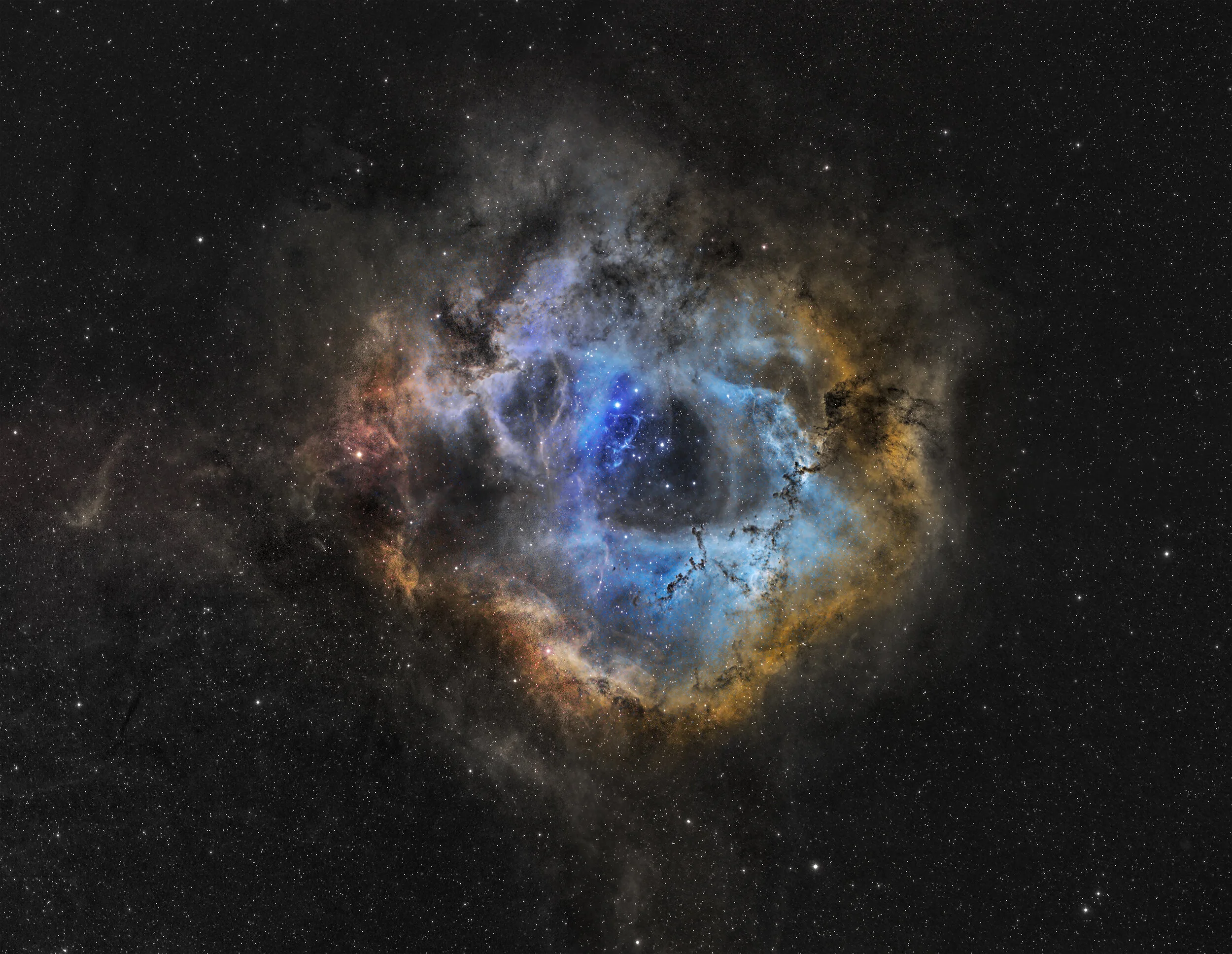
Image by Paul C. Swift
NGC 2237 Rosette nebula a cosmic cloud.
A 4 panel mosaic Frames: 120x1800"
Integration: 60.0 hours
This data was acquired with my Takahashi TSA 102. Hope you enjoy it!
NGC 2237 Inside the Rosette nebula
Imaging telescopes or lenses: Takahashi TSA 102,
Imaging cameras: Starlight Express SXVR-H18
Mounts: Sky-Watcher NEQ6 Pro
Guiding telescopes or lenses: Takahashi TSA 102
Guiding cameras: sx loadstar
Focal reducers: Takahashi TOA/FS Reducer
Software: PHD, Main Sequence Software
Filters: Baader Red 2", Baader SII 8.5nm, Baader B 2", Baader G 2", Baader O III 8.5nm, Baader Ha 8.5nm
Accessories: Starlight Xpress USB filter wheel
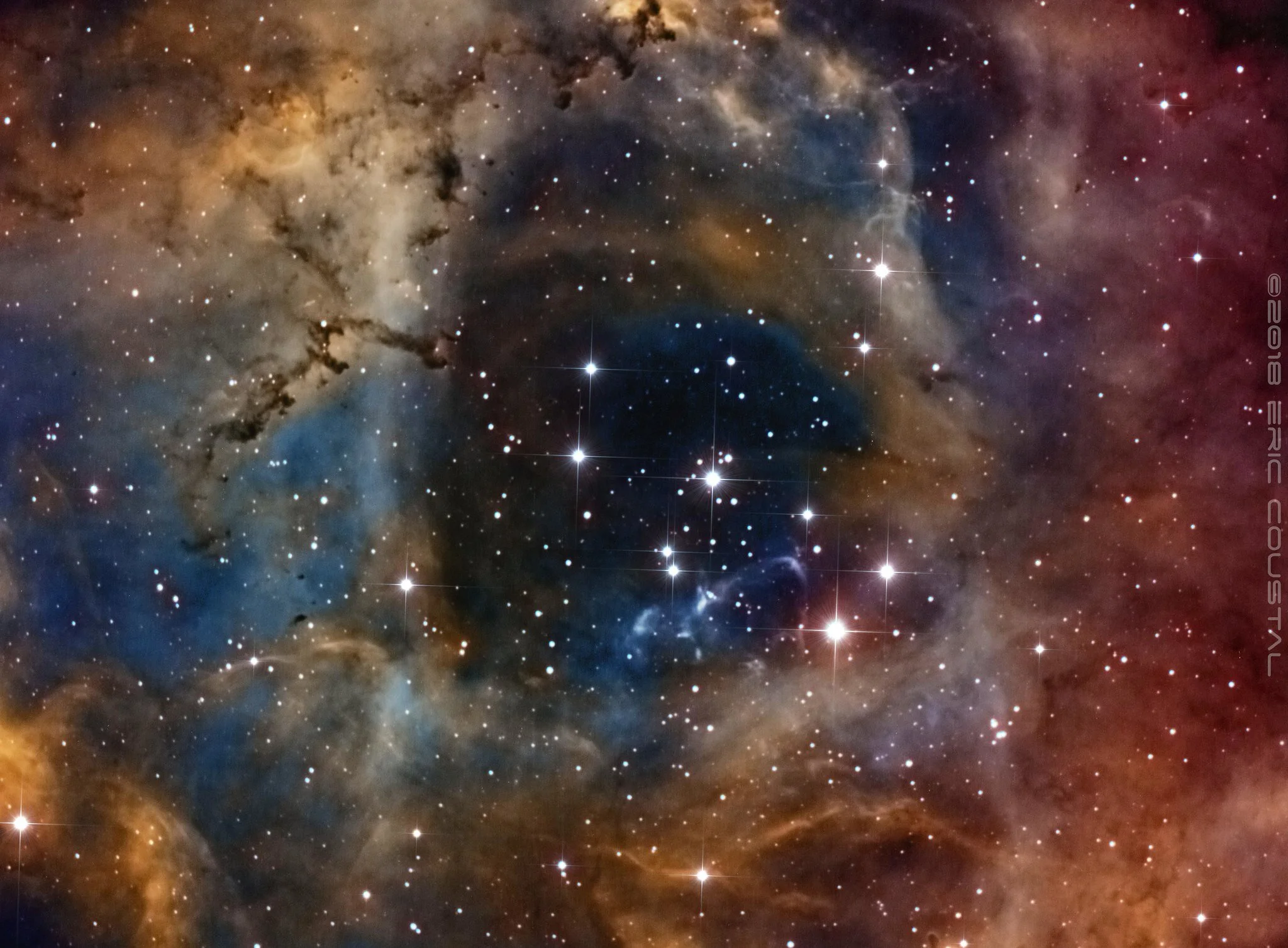
Image by Eric COUSTAL
Rosette H_SHO_R_TIFF_Spike
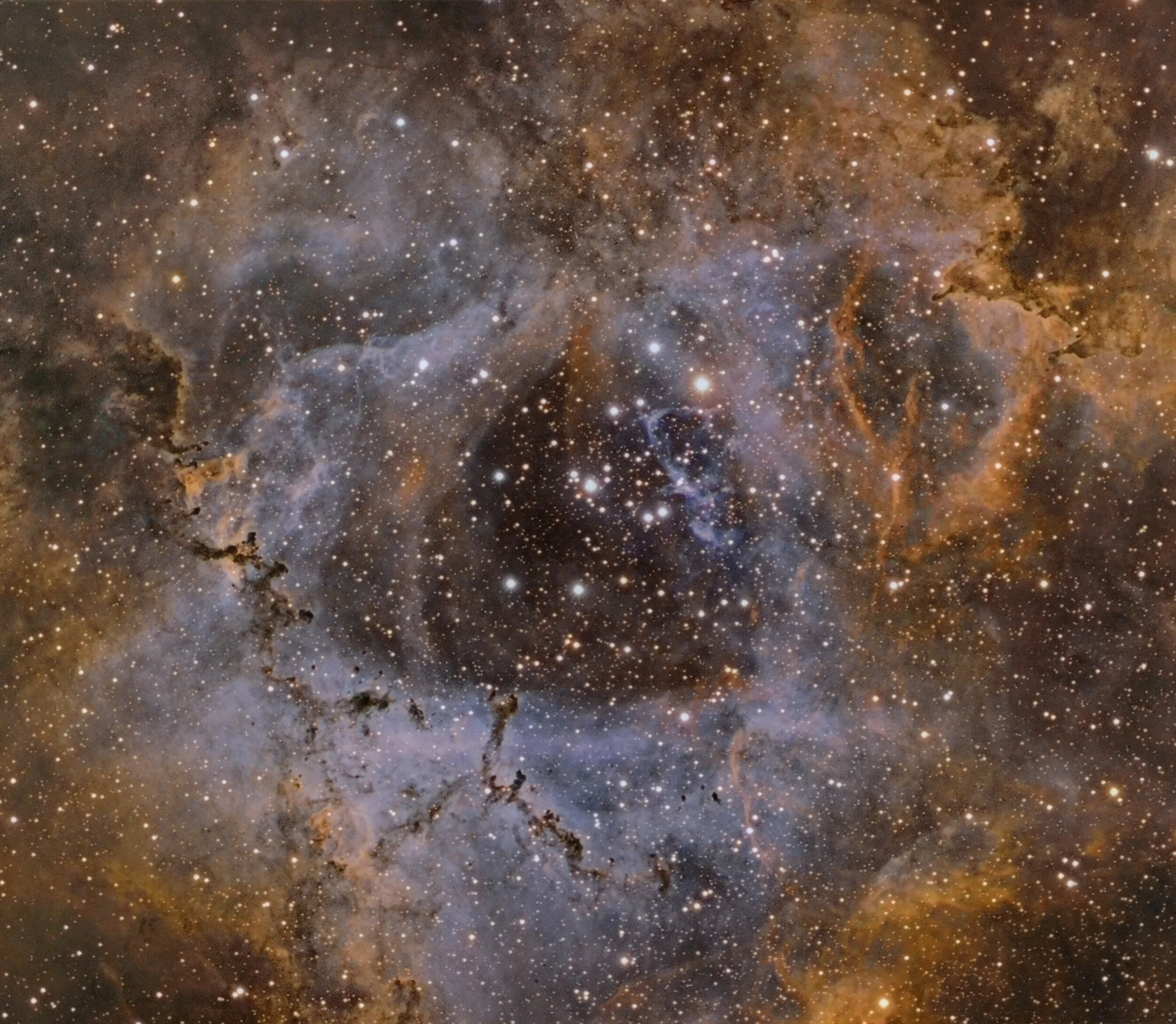
Image by Chuck Manges
The Rosette Nebula in HST(Hubble Space Telescope) Palette***Reprocessed***
The Rosette Nebula in HST(Hubble Space Telescope) Palette
The original version was a bit oversharpened, so I tried to tone in down with my older version of the Rosette in HST
The Rosette Nebula (Caldwell 49 or NGC 2237) is a large, circular H II region located in the constellation Monoceros . Open cluster's NGC 2244 (Caldwell 50) stars have been formed from the nebula's matter.
The Rosette Nebula consists of 5 parts NGC 2237,NGC 2238,NGC 2239,NGC 2244,NGC 2246. The cluster and nebula are about 5,000 light-years from Earth and measure roughly 130 light years in diameter. The nebula is estimated to be around 10,000 solar masses
I used LRGB data that I finished collected last night with older data.
First the older data used:
Telescope-AstroTech AT65EDQ
Mount-Orion Sirius
Camera-QHY9M
12/26/13,12/27/13
*Red- 7x10 minutes
Ha-3x20 minutes(as green)
OIII-3x20 minutes(as blue)
SII-3x20 minutes(as red)
LRGB
Telescope: 11" Celestron EdgeHD w/Hyperstar (F/2)
Camera: QHY23M
1/2/16,1/27/16
LUM- 33x120sec
Green-14x120sec
Blue-14x120sec
Red- used HA- 9x300sec from Hyperstar & Red from QHY9M/AT65EDQ( 7x10 minutes)
(5h 57m total)
Closeup of the "core" flic.kr/p/CDaZdd
Older HST version:
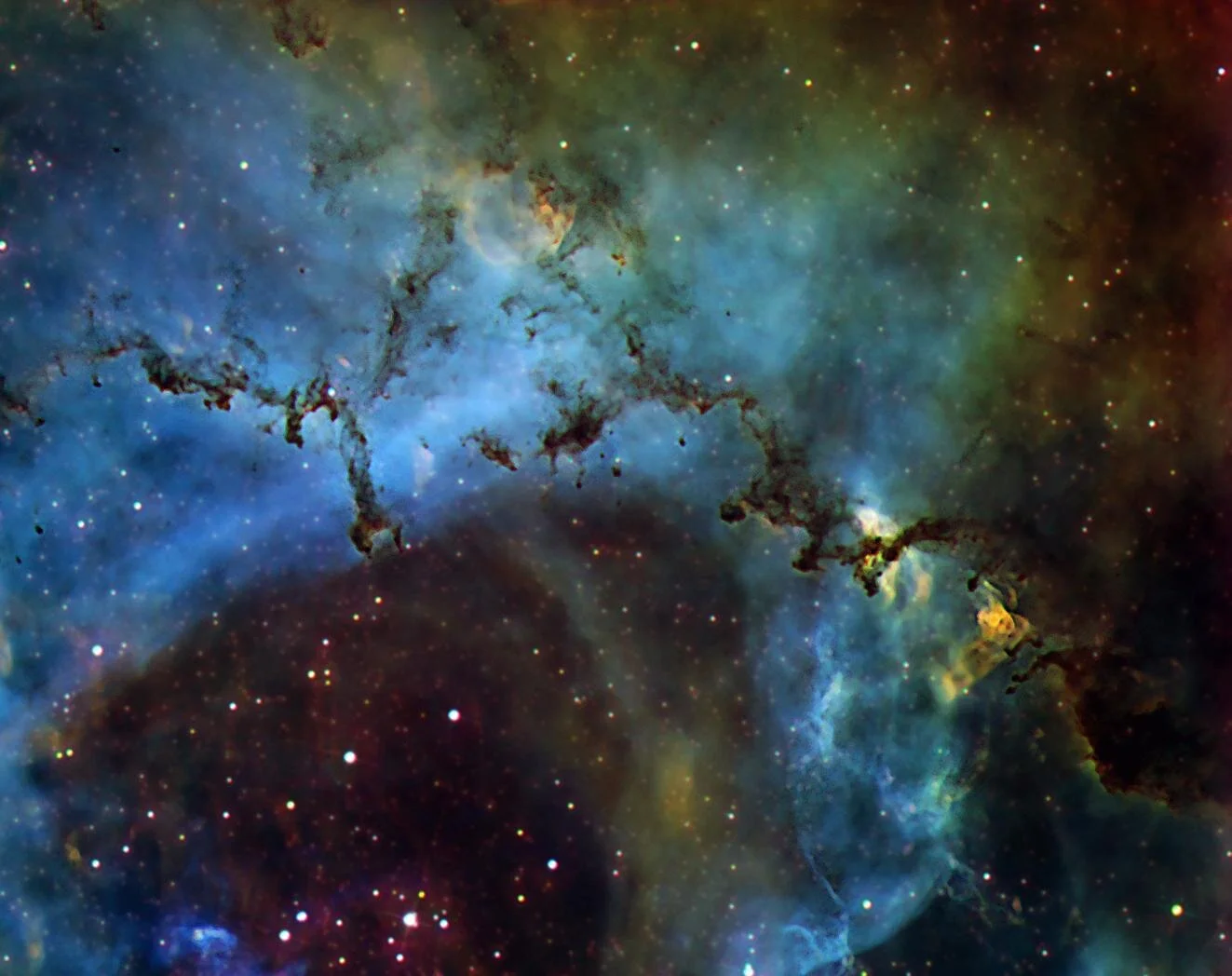
Rosette Nebula - Bok Globules. Image by Steve Martin
Bok Globules are pockets of dark cosmic dust and gas, usually containing new born protostars, on their way to becoming fully fledged main sequence stars. The Bok Globules here are being created by the interstellar wind and radiation being blasted by the open cluster NGC2244 at the centre of the nebula. Date: 26 Oct 2015Mount: AP Mach 1Imaging scope: AT8RC CCDT67 1080mmImaging camera: Trius SX-694Lights: Ha 6 x 1200 sec 2x2OIII 6 x 1200 sec 2x2SII 4 x 1200 2x2Calibration: 50 Flats, 100 Bias eachGuide scope: OAG LodestarOther details: Captured with SGP, guided with PHD, stacked in DSS processed in Photoshop