
Top 5 Triangulum Galaxy M33 Images that have been forwarded to us over the past few years.
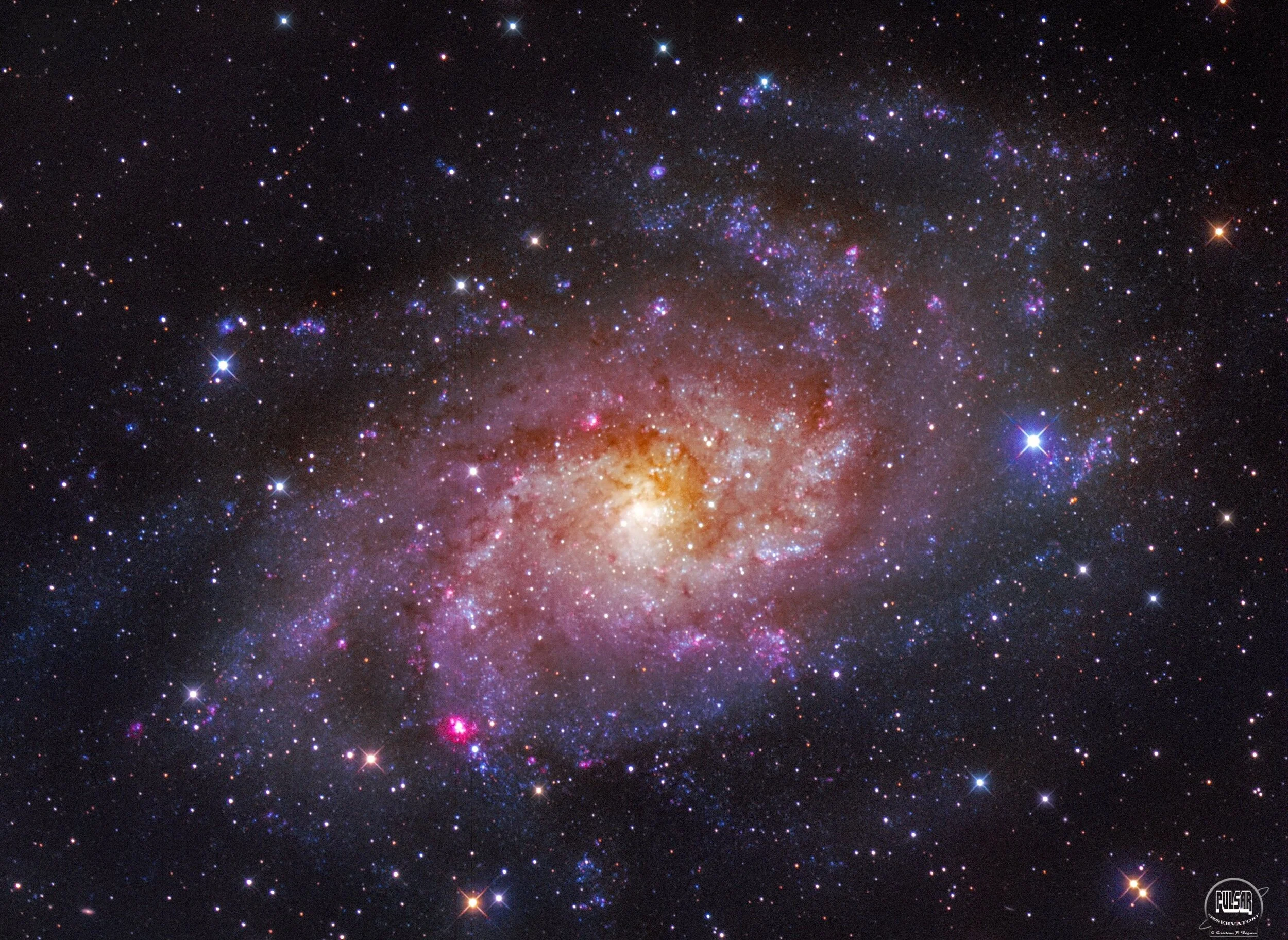
Image by Cristian Fanel
M33
With my homemade observatory and telescope Rc8 carbon
moravian G2-8300 mono
oag guide G0-0300
mount Az-Eq6
Software Pix and PS5 LRGB
L 40x300
R 37x300
G 36x300
B 35x300
Flat , dark and bias
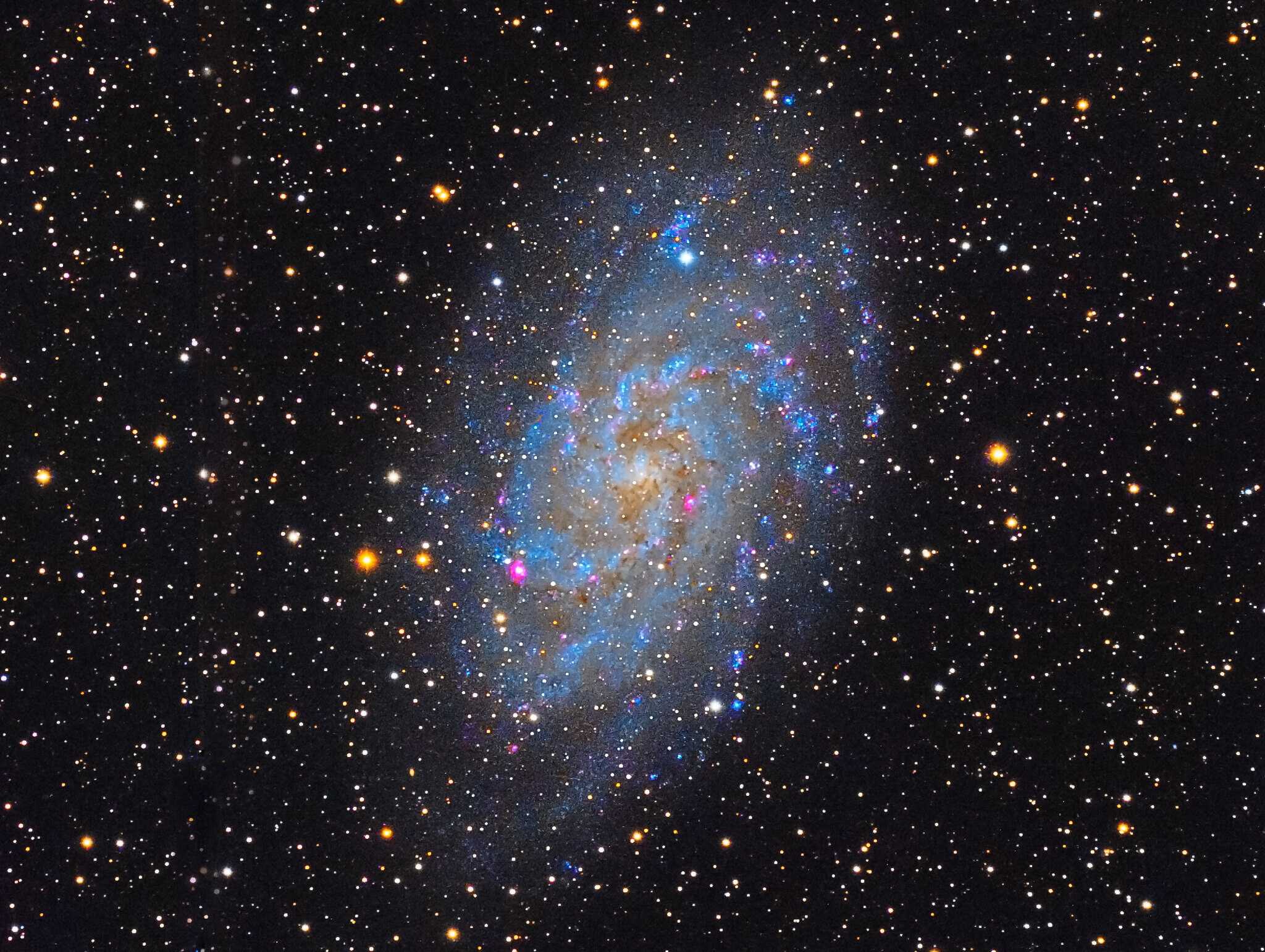
Image by Levan Verdzeuli
M33 LRGB ReProcessed
This is a re-processing of the same data from Abastumani.
Technical details bellow:
Camera: QSI583
OTA: TS80APO
Mount: iEQ30 Pro
unguided
L 16*90 bin2x2
R 8*90 bin2x2
G 8*90 bin2x2
B 8*90 bin2x2
total exposure: 1 hr.
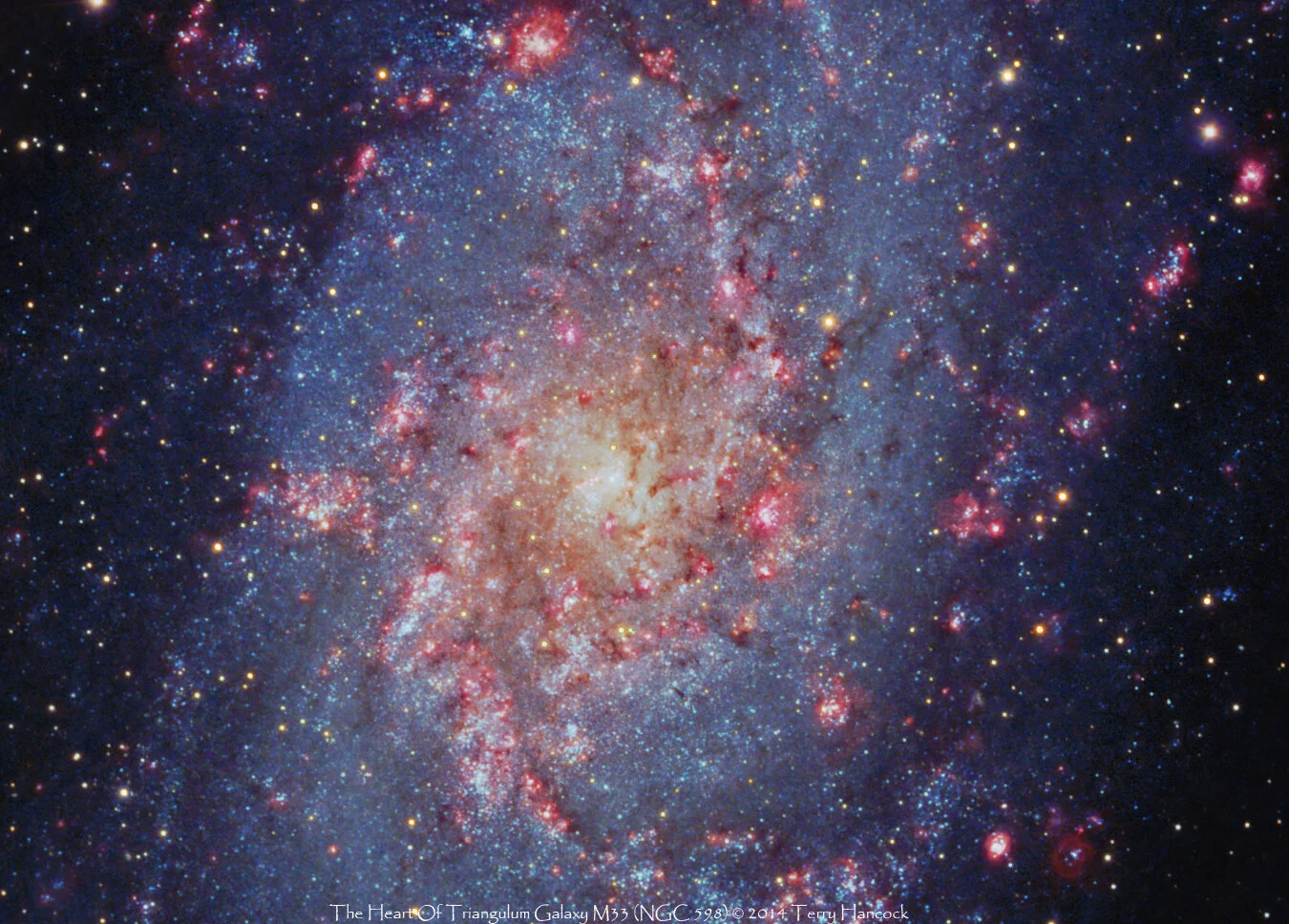
Image by Terry Hancock
This image is a collection of amateur data all captured from my backyard observatory in Western Michigan. Exposed in LRGB and H-Alpha using QHY23 and QHY9 Monochrome CCD's with TMB130, TMB92 refractors and a Takahashi E180 Astrograph.
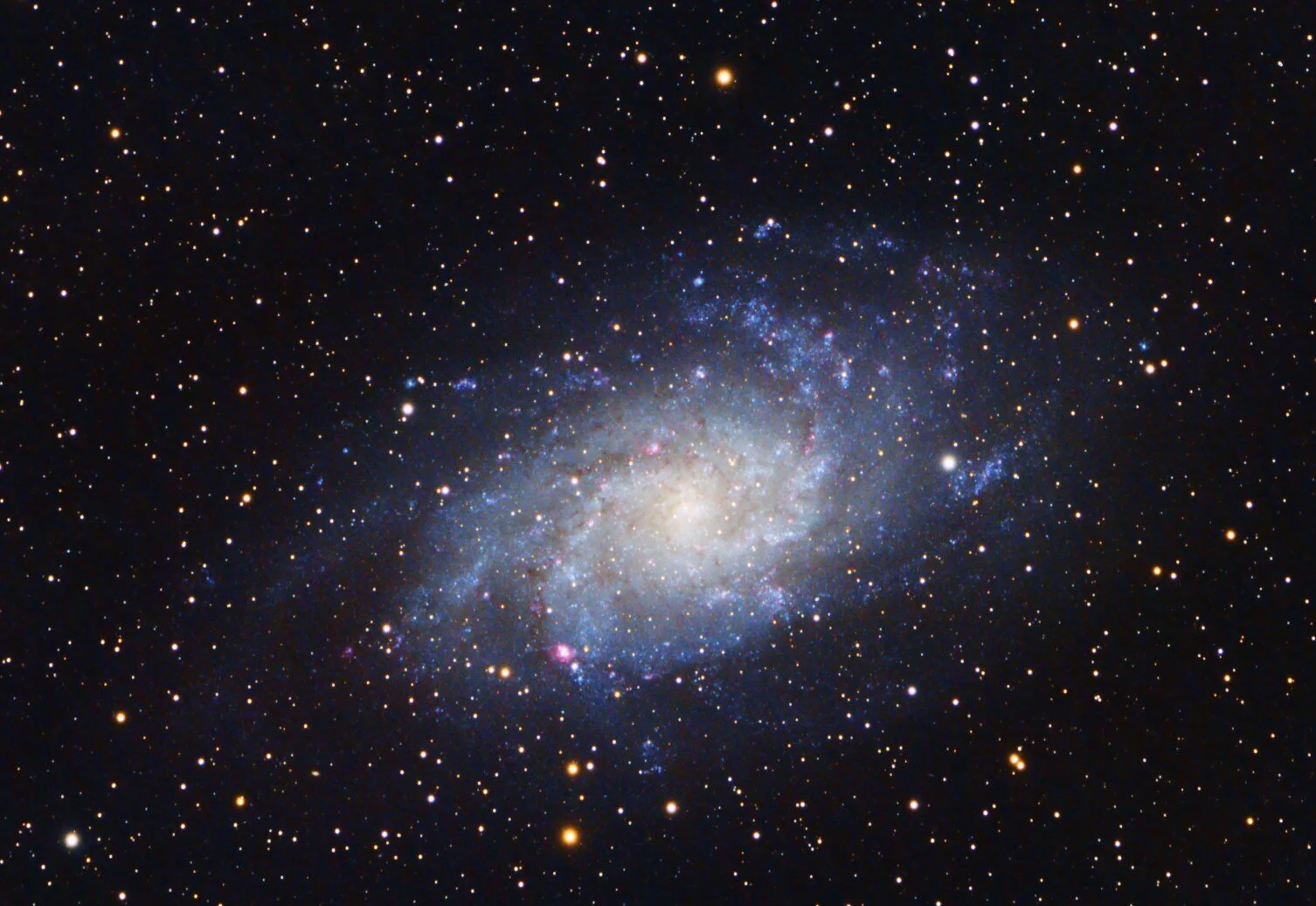
Image by Kees Scherer
Messier 33 (M33, NGC598) Triangulum Galaxy. DSLR image
Skywatcher 100 Esprit APO refractor + Canon 6D full spectrum mod with Optolong-L filter. Exposure time: 6hr30min (99x240sec) august 18-19 2015 ISO1600. Stacked in Deepskystacker with 21 flat frames and 65 bias frames. Processed with Pixinsight. Mount: Skywatcher AZ-EQ5-GT. Capture software: Backyard EOS. Guided with PHD2 and Orion Starshoot autoguider on 50 mm guidescope.
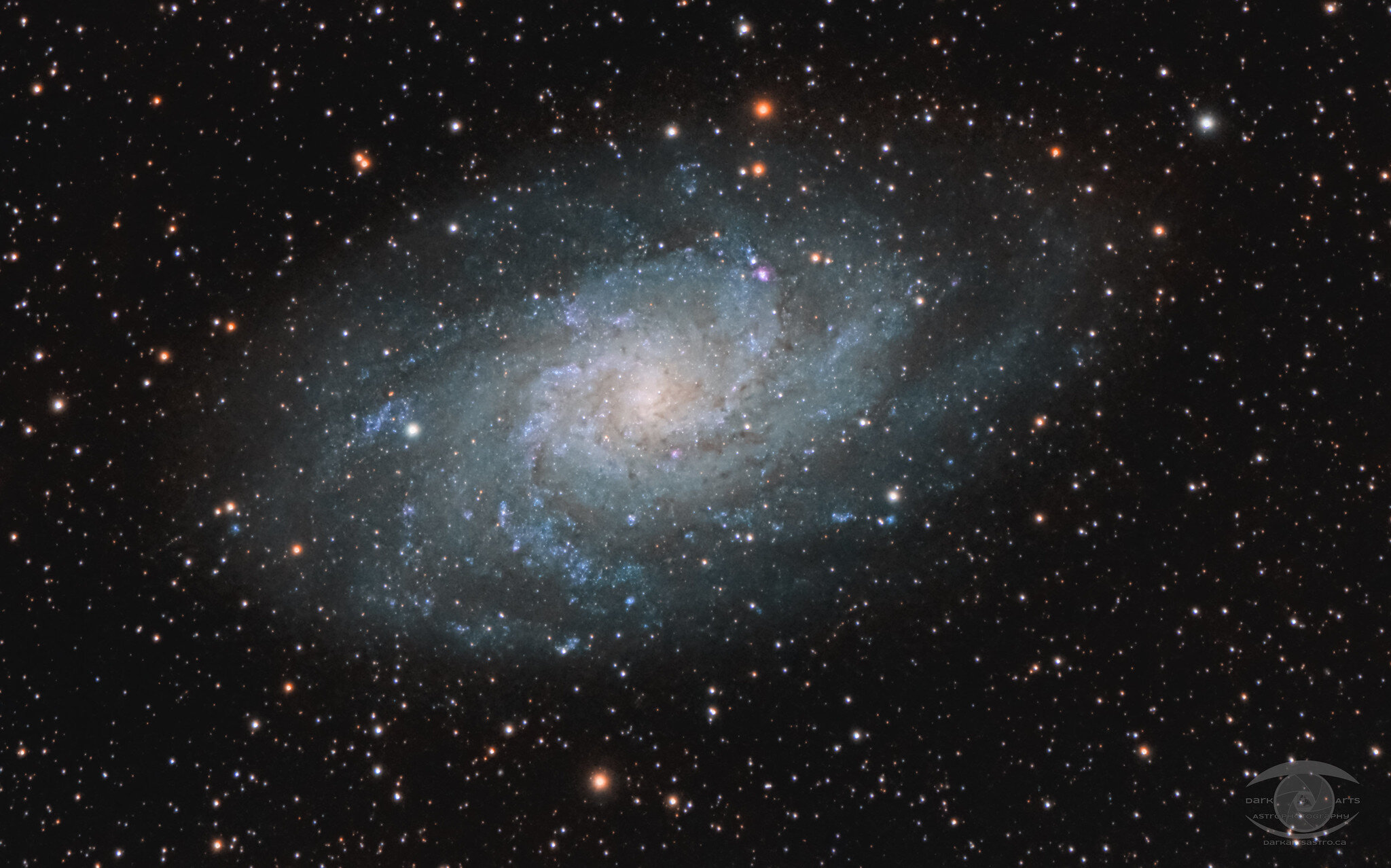
Image by Joe Gilker
M33 - The Triangulum Galaxy
M33 M33 can be found in the constellation Triangulum, which gives it its name. It's the second closest galaxy to our own Milky Way at a distance of 2.7 million light-years and 3rd largest in our local group after Andromeda and the Milky Way. Under excellent conditions under the darkest of skies, it can be seen with the naked eye by people with good eyesight.
This is another project "from the archives" and I didn't get to shoot this galaxy this year. I've shot M33 several times over the years, so I dug through my top 4 sessions, choosing only the best exposures from each to combine into this full image containing a full 5 hours of integration time.
--==TECH DETAILS==--
-=Session 1=-
Nikon D7000
Explore Scientific ED80
Celestron AVX Mount
30 x 120 second exposures @ ISO 1600
-=Session 2=-
Nikon D5100
Explore Scientific ED80
Celestron AVX Mount
40 x 120 second exposures @ ISO 1600
-=Session 3=-
Nikon D5100
Explore Scientific ED80
Celestron AVX Mount
20 x 300 second exposures @ ISO 1600
-=Session 4=-
Explore Scientific ED80
Celestron AVX, guided
ZWO ASI1600MC-Pro camera
20 x 180 seconds
Total 300 minutes (5H) integration time.